Australian law focuses on operators’ provision of online casino games, while a Curaçao connection does not make a service locally authorised.
If you are looking at an online casino connected with Curaçao, start with the Australian rule, not the location shown on a site. The Interactive Gambling Act 2001 prohibits operators in Australia from offering online casino games to Australian residents. A business being based offshore does not change the rule that applies to services offered to people here.
That distinction matters: the law described here is directed at the operator’s provision of the service. It does not explicitly make an individual player’s use of an offshore casino a criminal offence. So it would be wrong to read the operator prohibition as an automatic criminal charge against every Australian who visits an offshore site.
It would also be wrong to treat the absence of an explicit offence for players as approval. The law does not give an offshore casino permission to offer prohibited games to Australians, and it does not turn access into a locally authorised service. Those are separate points. Easy to muddle.
When I read a claim about an offshore casino, I keep those two questions apart: what Australian law says about the operator, and what it says about the individual player. For the first, the rule is clear: operators must not provide online casino games to Australian residents. For the second, the Act does not explicitly criminalise players for using offshore casino sites.
That is the starting point for understanding any claim about a Curaçao connection in 2026. The country named in a site’s branding or licensing claim does not answer the Australian legal question. Nor does the player-facing site experience tell you what the law permits. First understand the local rule; then assess what the offshore claim actually establishes.
When a site describes itself as a Curaçao casino, that label tells you how the operator presents its connection to Curaçao. It does not show that the site is permitted to offer online casino games to people in Australia. Those are separate questions, and the wording on a homepage does not settle the Australian one.
That distinction matters because offshore branding can make a site sound established without telling you what happens when you try to use it from here. A page may mention a Curaçao licence, display a seal or describe itself as an online casino based there. None of those details, on their own, demonstrate that Australians can lawfully be offered the service. A polished presentation is not an Australian authorisation.
The practical issue for an Australian reader is also access. The Australian Communications and Media Authority (ACMA) can ask internet service providers to block websites that offer prohibited interactive gambling services to Australian customers, as well as unlicensed gambling services offered to adults here. So a site that appears available in one moment may not remain reachable through an ordinary Australian connection. A changing address or a working page elsewhere does not answer whether the service is allowed to operate for Australians.
ACMA can also issue blocking orders as a last resort when it considers customer safety to be at risk. That is a regulatory step, not a review of whether a site looks trustworthy or whether its Curaçao wording is convincing. If access is blocked, treat that as a reason to stop and check the situation—not as a puzzle to solve by finding another route in.
The authority’s response is not limited to blocking. ACMA can issue fines to operators that breach the Interactive Gambling Act 2001. The point for you is straightforward: an offshore label does not put an operator beyond Australian enforcement, and it does not turn a restricted service into one that is acceptable to use here. The operator’s claims and the local rules are not interchangeable.
I would be wary of reading too much into a site that loads, too. A page opening on your device is only a technical fact; it is not evidence of permission. Equally, a site that disappears or becomes inaccessible is not proof of any particular licensing claim. Availability can change as blocking action is taken, and the visible result may differ between internet connections. Don’t use access alone as your test.
Nor should a Curaçao label be treated as a workaround. A VPN may affect what you can see online, but it does not change the rules that apply to people in Australia. Using one to reach a casino may lead to voided winnings, account closure or loss of your deposit. That is a poor bargain for a page that still cannot establish Australian permission.
There is another practical risk: an unlicensed gambling service does not come with the same consumer protections as a service authorised for the Australian market. If winnings are withheld, Australian laws may not assist you in resolving the dispute. That does not mean every operator will behave the same way; it means you should not assume that a foreign label gives you a reliable route to recover money or enforce a promise.
So, when you encounter a Curaçao-branded casino, read the wording narrowly. It may describe the operator’s claimed offshore connection. It does not tell you that Australians may be offered its games, that ACMA has approved it, or that the site will remain accessible from Australia. Those are different matters.
The useful response is not to look for a more persuasive badge or a different spelling of the same claim. Keep the Australian access question in view, and don’t treat a blocked page, a successful login, or an offshore label as a substitute for permission. The label is only a label.
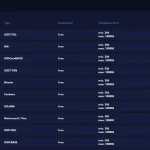
If you’re considering a casino with a Curacao licence as an Australian player in 2026, check the licensing and payment details that are available before choosing. These brief verdicts highlight the stated facts for each operator.
Lucky Dreams
Lucky Dreams is listed with a Curacao licence and a minimum deposit of A$20 via POLi. If POLi is your preferred deposit method, that payment detail may be useful to you.
Ricky Casino
Ricky Casino lists crypto payouts in under 1 hour and PayID payouts in 1–3 business days. The minimum deposit is A$20, or A$30 to qualify for the bonus.
Neospin
Neospin is listed under Curacao Gaming Control Board licence OGL/2023/176/0095, held by Hollycorn N.V. That licence detail is the key stated point for you to check.
Vegaz Casino
Vegaz Casino lists Curacao licence OGL/2024/1335/0780 and a minimum deposit of EUR 20. Check that deposit amount against your preferred currency before you proceed.
LuckyVibe
LuckyVibe is listed under Curacao Gaming Control Board licence OGL/2023/176/0095, held by Hollycorn N.V. The supplied information identifies its licence but gives no payment details.
DragonSlots Casino
DragonSlots Casino is listed with a Curacao Gaming Authority licence, with Jumpman Gaming Ltd named. The licence and operator are the stated details available for you to review.
SkyCrown
SkyCrown is licensed by the Tobique Gaming Commission, rather than listed with a Curacao licence. Its stated payout speeds are around 10–15 minutes for crypto and 1–5 days for fiat, with a minimum deposit of A$30.
Uptown Pokies
Uptown Pokies is listed with a Curacao licence, has been operating since 2017, and has a minimum deposit of A$20. Those are the available details for you to consider.
SpinsUp
SpinsUp is listed under Curacao Gaming Control Board licence OGL/2023/174/0082, held by Dama N.V. The licence information is the key stated detail for you to review.
7Bit Casino
7Bit Casino is listed as a Curacao casino operated by Dama N.V. No further details are provided here, so check the available terms before deciding.
A site may describe itself as licensed in Curaçao, but that claim does not establish that it is licensed in Australia. The two labels answer different questions. An offshore licence is a claim about oversight elsewhere; Australian authorisation is what you need to verify against the Australian regulator’s records.
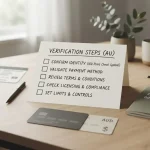
For that check, go to ACMA’s website and consult its public register. ACMA encourages Australians to use the register to check whether a wagering service holds a valid Australian licence, and points people there to understand which gambling products are legal in the market. Start with the service’s exact name, not just the brand printed across its homepage. A trading name, company name and website name may differ, so compare the details carefully.
There is an important limit to what the register can tell you. It is a way to verify Australian licensing for wagering services; it is not a certificate that every product a site advertises is permitted. In particular, finding a service or a related company in an Australian register would not turn a Curaçao casino licence into permission to provide online casino games to people in Australia. The product matters as well as the name on the licence.
That distinction is easy to lose when a website displays a badge, a licence number or a formal-sounding company name. Those details may be presented as proof, but a site’s own wording is not the official Australian record. Nor does an offshore licence number, even if it appears genuine, answer whether the operator holds an Australian licence for a service that may legally be offered here. Keep the questions separate: what does the offshore claim say, and what does ACMA’s register show about the service in Australia?
I would treat a mismatch as a reason to stop and verify, not as a puzzle to solve by trusting whichever page looks more polished. Search the register independently rather than following a link supplied by the casino. Check that the listed service and the site you are viewing are actually connected; similar names alone are not enough. If the register does not confirm the Australian status you are looking for, an offshore badge cannot fill that gap.
This is not a technicality. Australian law does not permit operators to provide real-money online casino games to people physically in Australia. A Curaçao licence, or any other offshore licence, does not override that rule. So if the site’s pitch is specifically about a Curaçao-licensed casino for Australians, the key point is not whether the badge looks official. It is that the badge does not establish Australian authorisation.
The register is useful for checking wagering services, but it should not be read as a shortcut to approval for online casino play. That is the practical distinction: verify the Australian status of the service through ACMA, and do not treat a licence issued elsewhere as a substitute. A polished footer is still a footer.
There is another reason not to rely on the operator’s own licence page. If a dispute arises, an offshore label does not by itself give you the protections attached to a service licensed in Australia. Unlicensed gambling services lack Australian consumer protections, and Australian laws may not help if an operator withholds winnings. That is a serious difference, not fine print.
Do not try to make an uncertain status work by using a VPN to reach a site. Accessing a casino that way may lead to winnings being voided, an account being closed or your deposit being lost. It does not change the site’s Australian authorisation status.
My rule is simple: use ACMA’s public register for the Australian licensing check, and read what it actually confirms rather than what an offshore casino says about itself. If you cannot establish that the service is licensed in Australia, a Curaçao licence is not a replacement.
“Curaçao casino” can mean more than one thing. Someone may be asking about a place to visit on the island, an online casino that uses Curaçao in its branding, or a licence claim on a gambling website. Those are different subjects. The wording alone does not tell you which one is meant, and it does not establish that a particular venue exists or that an online service may accept Australian customers.
That distinction matters because a physical venue and a website are not the same service. A casino you might visit in Curaçao is a question about a place and its local operation. A site you can open from Australia is a remote gambling service offered to a person here. The island name on a webpage does not turn one into the other.
I would be careful with any description that slides between those meanings. “Based in Curaçao,” “for Curaçao players,” and “licensed in Curaçao” may sound like three ways of saying the same thing. They are not. A location claim, an intended audience and a licence claim each say something different, and none of those phrases by itself tells an Australian reader what rules apply to an online casino serving them.
If you are looking for a casino to visit while travelling, an online result about a gaming site is not an answer to that question. It may use the island’s name as part of a brand or as a description of an offshore licence. That does not identify a physical casino, its address, or whether it is open to visitors.
The reverse is just as important. Finding information about a physical casino would not show that an online service with a similar name is connected to it. A shared word or logo is not proof of ownership, location, or a common licence. Treat the venue and the website as separate until there is reliable information linking them.
I would not turn a general phrase into a travel recommendation. It is easy to read a list or a promotional page as evidence that a particular place is operating, but those are not interchangeable with direct details about a venue. Nor should a page about a land-based casino be taken as a guide to online play from Australia. Different question, different service.
For Australian readers, the practical point is narrower: the Australian rules apply to online casino gaming offered to people located here. Online slots and casino-style games, including blackjack, cannot lawfully be provided to customers in Australia. Adding Curaçao to a site’s name, address, or licensing language does not change the nature of the activity.
That is why “Curaçao casino” is not enough information to judge an online offer. The phrase might describe where an operator says it is based, or it might be branding with no clear connection to the operator’s actual location. Either way, it does not establish that Australians may lawfully be offered the games.
This is not a claim about every service or venue associated with the island. It is a boundary between two issues: what a business may do in one jurisdiction, and what an online gambling operator may offer to people in Australia. A foreign place-name does not move you outside that context.
A site may also use “Curaçao” as shorthand for a licence. That wording is not a description of a casino building, and it is not proof that the site has any connection with one. It is a claim about the operator’s regulatory position. Keep the categories separate; otherwise the word does too much work.
When a page mentions Curaçao, slow down and identify the specific claim. Does it give a venue name and a physical location? Is it describing an online operator? Is it talking about a licence? A sentence that answers one of those questions does not automatically answer the others.
This sounds obvious, but promotional wording often relies on the reader joining the dots. An island reference can make an online service feel established or local to the place. A licence phrase can make a website sound approved for every market. Neither impression follows from the wording alone.
Nor does a description of a destination establish that online casino games are available to Australians. The legal issue is the service being offered and the customer it is offered to—not whether the operator has put an island name in its branding. For Australians, the relevant boundary remains that online slots and casino games such as blackjack are not permitted to be provided here.
There is no need to infer a connection between a website and a real-world venue from a matching name. A name is a starting point for understanding a claim, not evidence that the entities are related. Keep that modest standard and you are less likely to mistake presentation for proof.
A useful way to approach the subject is to separate three questions in your mind:
The answers do not come from the same phrase. A destination description cannot settle the online service’s status, and an offshore licence claim cannot make Australian restrictions disappear. Likewise, knowing that Australian law governs online offers to people here says nothing by itself about the existence or operation of a physical venue elsewhere.
That separation also helps with near-identical names. A site can use words that resemble a venue or a destination without demonstrating any relationship. Do not assume that a brand name proves where a company operates, and do not assume that a location reference tells you where its customers are permitted to play.
The safest reading is a restrained one: Curaçao may be part of a description, but the description must be read in context. It is not a shortcut to a conclusion about a venue, a relationship, or Australian access. When the subject is online casino gaming, the Australian restriction remains the point that should not get lost. The island name does not rewrite it.
A ranking can tell you which sites its publisher chose to feature. It cannot establish that a service is authorised in Australia. That matters when you are comparing sites described as Curaçao casinos: a confident label, polished page or prominent place on a list is not proof of Australian authorisation.
I’d start with the Australian check, not the sales pitch. ACMA’s public register is the place Australians are encouraged to consult to see whether a wagering service holds a valid Australian licence. Look up the service by the name it actually uses, and check that the register entry matches the operator you are considering. Similar names are not a match.
Then read the result carefully. A register entry is evidence about the service and licence it identifies; it is not a blanket approval for every product a company might offer. Nor does a Curaçao licence claim amount to Australian authorisation. Keep those questions separate: what does the public register say about this service, and what does the site say about its offshore licence?
This is a more useful way to assess a supposed Curaçao casino list than counting how many sites it names. A list may mix brands, repeat the same operator under different names, or present its own criteria as if they were a regulator’s decision. Without a matching official record, its ranking is editorial, not verification.
The same goes for claims about a “best” casino. Best by whose measure? A review may focus on design or games, but those qualities do not answer whether the service holds an Australian licence. If the page never directs you to a checkable entry in ACMA’s register, it has not answered the question that matters here.
I would not use an offshore licence number or a badge as a substitute for that check, either. They may describe what the operator claims about its status elsewhere; they do not establish Australian authorisation. And if a site’s identity is difficult to pin down, that is a reason to stop and verify, not to accept the most reassuring version of its story.
The key is to avoid treating a collection of recommendations as a register. Start with ACMA’s public record, match the service carefully, and don’t read more into an entry than it says. A list can be a list. Nothing more.
When you look at an online product, start with what it lets you do, not the words used to describe it. In Australia, online slots and casino games such as blackjack are illegal to provide to people here. The game category matters: a slot does not become a different kind of service because a site calls it “gaming” or places it alongside other betting options.
That distinction is useful because online gambling is not one single activity under Australian rules. Casino-style games are prohibited, and in-play online sports betting is also illegal. Those rules concern different products; the fact that one is prohibited does not make every other form of online gambling the same thing. Nor does it make a casino game permissible simply because it appears on a site with sports markets or other features.
I’d read the actual game description before letting a broad label do the work. A reel-based slot is still an online slot. Blackjack remains a casino table game whether it is presented with a live dealer or a digital interface. The packaging can change; the underlying activity does not.
In Australia, online slots and casino games such as blackjack are illegal to provide. Additionally, in-play online sports betting is also prohibited.
This is also why searches for Curaçao gaming casinos can lead people down the wrong path. “Gaming” is a loose umbrella word, not a legal category that settles whether a particular product can be offered in Australia. If the service is an online slot or casino game, the relevant distinction is the game itself. A different label does not turn it into sports betting or remove the Australian restriction.
There is a practical trap here: a site may put several products on the same page, making them look like one bundle. I would separate them mentally. Casino games belong in one category; online sports betting is another, with in-play betting separately prohibited. The name of a menu tab tells you very little. The activity tells you more.
None of this is a recommendation to try a different kind of gambling. It is simply a clearer way to understand the line Australian rules draw. If the product is an online slot or casino game such as blackjack, it falls on the prohibited side for people in Australia. Changing the wording around it does not change that.
A site can display responsible-gambling wording, links to support services and account controls. Those features are worth examining, but seeing them on a page does not tell you who is accountable for providing them or whether they apply to you. A Curaçao label, by itself, is not evidence that Australian protections cover your account.
For services that are licensed to operate in Australia, responsible-gambling requirements are part of the regulatory framework. That can include measures intended to help customers manage their activity. But do not turn that into a general assurance about offshore casino sites: a familiar logo or a polished “play responsibly” page does not establish that the service is licensed in Australia or subject to those requirements here.
Deposit limits are one example of a safeguard people may look for. A specialist review has described licensed online casinos as offering limits that customers can set daily, weekly or monthly. Treat that as a description from that type of source, not as a guarantee about every operator or every account. If a site advertises limits, check its own terms for how they work, when a change takes effect and whether the controls are available to you. A control that exists only in promotional copy is not much of a safeguard.
Support information matters too. Reputable platforms provide information about gambling-related harm and direct people to professional support services in Australia. Check that the links lead to actual support information and that the service explains how to reach it. A page that mentions help without making it accessible gives you little to rely on when you need it.
I would also separate a safety feature from a promise of safety. Limits and support links can be useful, but they do not remove the risks of gambling or guarantee that an operator will handle a complaint in your favour. Read the terms before depositing, and keep records of what the site says about controls and support. That is a practical check, not a seal of approval.
If you are already worried about your gambling, use a professional support service rather than relying on an operator’s own tools alone. Take the support information seriously, but verify what it offers and who it is for. A responsible-gambling message is easy to print. Accountability is the harder part.
A Curaçao casino advertising cryptocurrency payments may sound different from one offering familiar payment options, but the payment method does not establish that the service is safe or authorised for Australians. I would separate those questions: how the site handles information, what identity checks it applies, and whether the service is authorised to operate here.
Casinos use SSL encryption to protect transactions and sensitive information as it moves between you and the site. That is a security measure, not proof that the operator is trustworthy or that the service is authorised in Australia. A crypto payment option does not add that proof either. Treat claims about encryption as one detail to check, not as a reason to overlook the rest.
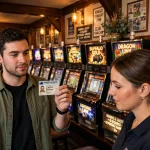
Identity checks matter even when a site promotes crypto. Casinos conduct KYC checks and require identity verification before withdrawals. The documents commonly requested include photo identification, proof of your address and evidence that you own the payment method used. Read the site’s explanation of these checks before handing over documents, and make sure it explains how to submit them and what happens if verification is incomplete. The payment method does not make those requirements disappear.
Be cautious about sharing identity documents or payment information with a service whose identity and handling practices you cannot establish. If a site asks for sensitive material, its security claims should be clear and consistent with its verification process. Encryption protects information in transit; it does not tell you how a company stores or uses it.
Most importantly, cryptocurrency does not change the Australian legal position. An offshore label or crypto option does not make an online casino authorised here. Unlicensed gambling services lack Australian consumer protections, and Australian laws may not help if a site withholds winnings. Using a VPN to access a casino may also lead to voided winnings, account closure or loss of your deposit. Not a clever workaround.
I would not use “crypto-friendly” as a safety rating. Check the service’s identity, its stated security and verification procedures, and its status in Australia separately. If any of those points is unclear, sending funds or identity documents is a decision to pause on—not a signal to rely on the payment method.
“New” tells you about a launch claim, not whether a service is authorised in Australia. A recently opened site may have fresh branding, a new payment page or a licence statement on its own website; none of that establishes that it holds a valid Australian licence. A Curaçao label does not fill that gap.
Before relying on any claim, check ACMA’s public register to see whether the wagering service holds a valid Australian licence. If a site gives you a licence number, verify it against the official register rather than accepting a badge or copied certificate at face value. If the service cannot be confirmed there, do not treat its claim as proof of Australian authorisation. Simple enough.
That check is about the status of the service, not how recently it appeared or how polished its pages look. A “new” label can change overnight; the register is the relevant place to check. Avoid using a VPN to reach a casino site. Doing so may lead to your winnings being voided, your account being closed or your deposit being lost.
There is another practical point: a service without Australian authorisation does not come with Australian consumer protections. If it withholds winnings, Australian laws may not help you recover them. A licence claim from another jurisdiction does not remove that risk.
So treat “new Curaçao casino” as a description the site is making, not a recommendation or a sign-off. Check the service on ACMA’s public register, and do not rely on the word “new,” a logo, or the operator’s own account of its status.
The Interactive Gambling Act 2001 does not explicitly make it a criminal offence for you to use an offshore casino. However, that does not make the service authorised in Australia, and you may face practical risks such as blocked access, account closure, or lost deposits or winnings.
You may be asked for photo ID, proof of address, and proof that you own the payment method used. Casinos commonly require identity checks before withdrawals.
PayID and some e-wallet withdrawals can be quick after approval, while bank transfers and cards can take several business days. Card withdrawals may also be slower or unavailable depending on the processor.