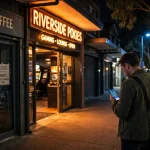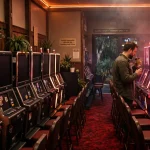
Lightning Link is an Aristocrat pokies series encountered on Australian venue machines; similar online titles are separate games.
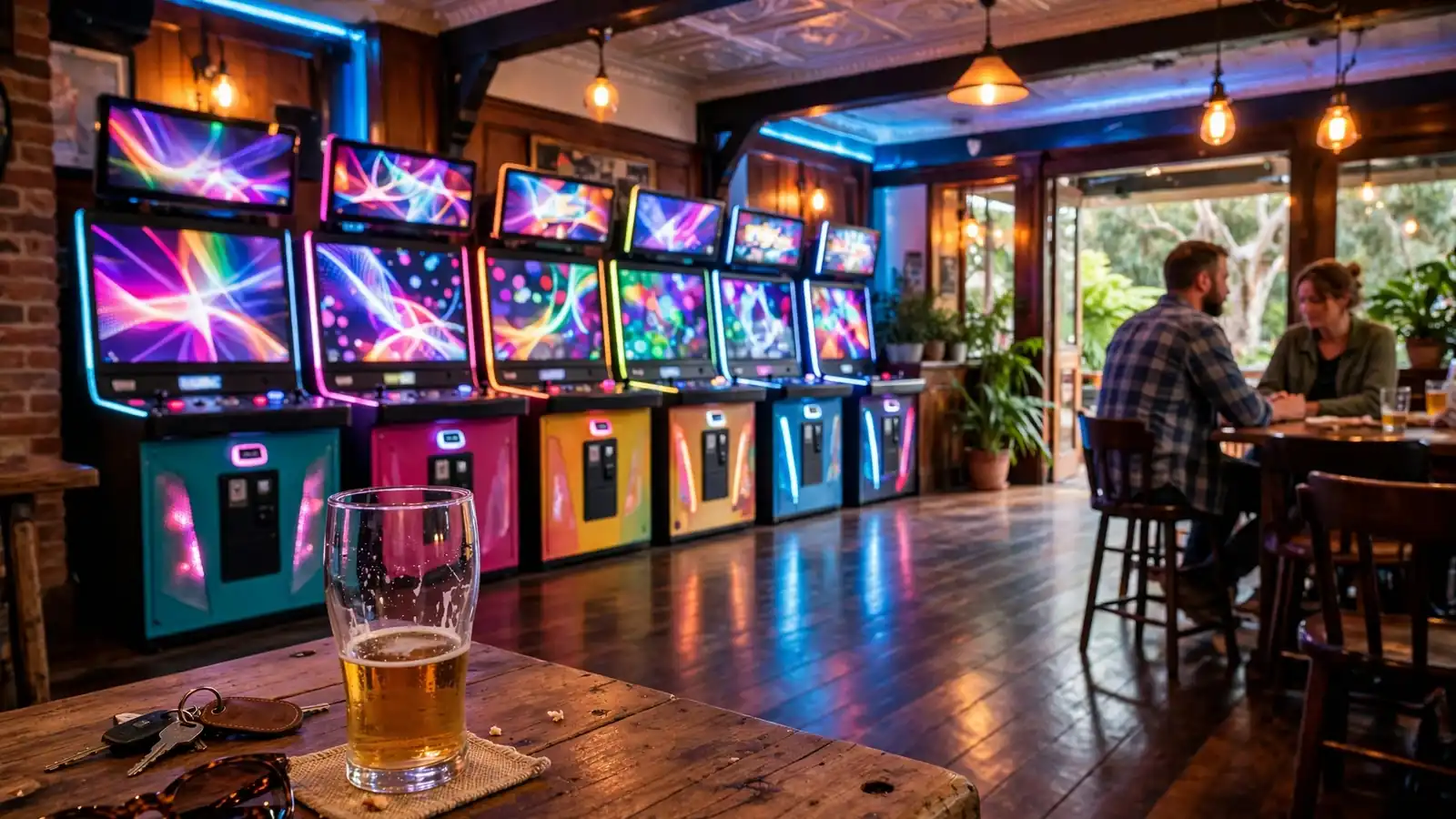
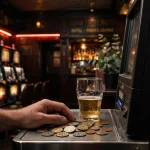
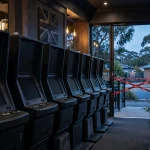
Lightning Link is a game series from Aristocrat, an Australian developer. In Australia, the name is associated with pokies played on machines in venues. That gives the game a clear local identity: it is a recognisable title from an Australian company, encountered in a physical venue rather than as a real-money online game for Australian players.
The distinction matters because “Lightning Link” can be used loosely in conversation. Someone might mean the Aristocrat series, a particular machine bearing its name, or an online game that resembles it. Those are not interchangeable. The series itself is the Aristocrat product; a game with similar features from another developer is a separate title, even if the presentation feels familiar.
If you have heard people call it a Lightning Link casino game, that is usually casual shorthand for the venue machine. “Casino” in the phrase does not change where the Australian version is played. Here, Lightning Link belongs to the land-based pokies floor. It is not a name for a general category of online casino games, either.
Choosing a Lightning Link online pokies site in Australia means checking the practical details that matter to you, such as licensing, deposit options and payout methods. Use these operator notes as a starting point and confirm the terms that apply to your play.
Lucky Dreams
Lucky Dreams lists a Curaçao license and accepts a minimum deposit of A$20 via POLi. That gives you two specific details to check when considering the site.
Ricky Casino
Ricky Casino lists crypto payouts in under an hour and PayID payouts in 1–3 business days. The minimum deposit is A$20, or A$30 to qualify for the bonus.
Neospin
Neospin lists a Curaçao Gaming Control Board license, OGL/2023/176/0095, held by Hollycorn N.V. You can use the license details as a starting point for checking its licensing.
Vegaz Casino
Vegaz Casino lists Curaçao license OGL/2024/1335/0780 and a minimum deposit of EUR 20. These details can help you check its licensing and deposit requirement.
LuckyVibe
LuckyVibe lists a Curaçao Gaming Control Board license, OGL/2023/176/0095, held by Hollycorn N.V. You can refer to those details when checking its licensing.
DragonSlots Casino
DragonSlots Casino lists a Curaçao Gaming Authority license, with Jumpman Gaming Ltd as the operator. The license and operator are the factual details available to guide your checks.
SkyCrown
SkyCrown lists a Tobique Gaming Commission license and a minimum deposit of A$30. Its stated payout speeds are around 10–15 minutes for crypto and 1–5 days for fiat.
Uptown Pokies
Uptown Pokies lists a Curaçao license, has operated since 2017, and sets a minimum deposit of A$20. These details give you a concise snapshot of its background and deposit requirement.
SpinsUp
SpinsUp lists a Curaçao Gaming Control Board license, OGL/2023/174/0082, held by Dama N.V. You can use this information when checking the site's licensing.
7Bit Casino
7Bit Casino lists a Curaçao license and is operated by Dama N.V. Those are the available licensing and operator details for your review.
Aristocrat’s Australian connection is part of why Lightning Link is familiar to local players. The developer is Australian, and the game series is played on venue machines around the country. So when you see the name in a local setting, the straightforward reading is the Aristocrat series on a physical machine.
I find it helpful to keep the product name separate from the place people happen to encounter it. A venue may have machines from different developers, and a title can be discussed as if it were a type of game rather than a branded series. But Lightning Link is specifically a series by Aristocrat. The name points to that product, not to every pokies machine with a similar look or style.
That distinction also helps when you are comparing what you have seen in person with something described online. A platform might use familiar language or offer a game with a related feel; that alone does not make it the same Aristocrat series. Similarity is not identity. A small distinction, but an important one.
The words “Lightning Link” identify the series, but they do not tell you which particular version is installed on a machine. Nor do they tell you what features or paytable that version has. Those details can vary between titles in the series, so it is worth reading the name displayed on the machine rather than relying on a broad label someone uses in conversation.
For a newcomer, the simplest starting point is this: Lightning Link is an Aristocrat pokies series, and its Australian setting is the venue floor. You do not need to treat “Lightning Link casino”, “Lightning Link pokies” and “Lightning Link game” as separate products simply because people phrase the name differently. In ordinary talk, they may all point to the same familiar series.
Where it gets confusing is when the word “online” is added. People may use that wording when looking for information or comparing games, but it does not alter the Australian availability of the original series. Lightning Link is played on venue machines here; an online title with comparable elements should be identified by its own name and developer. That is the cleanest way to avoid attributing another game to Aristocrat.
It is not a recommendation to play. Any real-money gambling content is for adults aged eighteen or over. This page is affiliate-linked and may contain sponsored recommendations; that does not change the distinction between the Aristocrat series and other games.
When you come across the name in Australia, think of a specific Aristocrat series with a venue-based home. That basic context keeps the terminology tidy before you get into individual versions or features. Local name, clear identity.
When people look for a free way to try Lightning Link, it helps to separate a social-casino game from gambling for money. A social-casino platform may present pokies-style play using virtual currency. That balance is for play within the platform: it does not give you a way to collect cash winnings. The key distinction is what the game can pay out, not whether its screen looks like a venue machine.
That changes what “free” means. In this context, free play is not a no-cost route to a cash prize. It means playing with virtual credits rather than staking money for a possible monetary return. A game can still borrow the familiar visual language of pokies, but that resemblance does not turn its virtual balance into withdrawable funds.
Treat the credits as part of the play experience, not as money in an account. If a social-casino game shows a balance, that number tells you what is available for its virtual play; it is not evidence that you have won or can withdraw real money. The defining limit is straightforward: players cannot receive real-money winnings from this kind of play.
This is why social-casino platforms that use virtual currency are not treated as gambling under the Interactive Gambling Act. Their play does not offer the prospect of winning real money. That is a distinction about the nature of the activity, not a claim that every game with similar graphics works the same way. Check what the particular platform says its currency is for, and do not assume that a Lightning Link-like appearance means it is a money-paying game.
A free version may still be useful if what you want is a low-stakes look at the format. You can see the presentation and get a sense of how a virtual-currency game feels to use, without treating each spin as a financial decision. But it cannot stand in for a real-money session: the balance has no cash-out value, and any result remains within that play environment. No cash prize. That is the point.
The word “free” can cover different experiences, so read it narrowly. It does not by itself tell you how a platform supplies virtual currency, whether access continues indefinitely, or whether any particular title is available. Those details depend on the platform and should not be guessed from a search result or a familiar game name.
Nor does “free Lightning Link” guarantee that you are looking at the original venue game. A social-casino title may use pokies conventions without being the land-based Lightning Link series itself. The name, artwork and feature presentation are not enough to establish that it is an official version. If exact identity matters to you, look at the game information shown by the platform rather than relying on a label alone.
Likewise, “play online for free” should not be read as “play for free and later withdraw a win.” Virtual currency and real-money funds are different things. A social-casino game may let you continue using its own credits, but that does not create a cash balance or a claim on a prize. Keep that distinction in mind before spending time or money on anything connected with a game.
Before starting, look for a plain explanation of the currency and the outcome. Is the play described as using virtual credits? Does the platform clearly say whether winnings can be paid out? If there is no real-money payout, regard the experience as entertainment rather than a way to earn. If the description is unclear, do not fill in the blanks yourself.
Also separate the game from any surrounding offers. A free-play label does not automatically tell you what other content the platform carries or what conditions apply to it. Read the platform’s own wording carefully, and do not confuse virtual play with real-money gambling. Anyone accessing real-money gambling content must be at least 18 years old.
This page is affiliate-linked and may include sponsored recommendations. That disclosure does not change the distinction: social-casino play with virtual currency cannot pay you real money. If you want free Lightning Link-style play, that is the limit to keep in view.
Lightning Link is a series rather than one identical game wherever its name appears. A specialist game review identifies Happy Lantern, Magic Pearl, Sahara Gold and High Stakes among its commonly encountered variants. Those names are useful starting points when you come across a Lightning Link pokie, but they do not tell you everything about how a particular version plays. The paytable and bonus features can differ from one variant to another.
That distinction matters if you have tried one version and then sit down at another expecting a carbon copy. The familiar Lightning Link name connects the games, but the details belong to the individual variant. I’d check the name on the machine and read its own information before assuming that what you remember applies. Same family, different particulars.
These are names associated with Lightning Link versions, not a promise that every venue carries all of them. You may see one version in a particular location and another elsewhere. Treat the title as an identifier, then use the machine’s displayed game information to understand that version.
The names may suggest a theme, but a theme alone is not a reliable guide to the paytable or bonus features. Happy Lantern and Magic Pearl, for instance, should not be assumed to share the same payouts simply because they belong to the same series. Nor does High Stakes, by its name, tell you exactly how its rules or features differ. The machine’s own information is the useful reference; guesswork from the title is not.
A paytable sets out the game’s listed payouts and the conditions attached to them. Since Lightning Link variants can have different paytables, the details shown for one version should not be carried over to another. If you are familiar with Sahara Gold, that familiarity does not establish what a Magic Pearl machine will display. Check the paytable for the game in front of you.
A Lightning Link variant with its own specific paytable and bonus features.
A member of the series that should not be assumed to share payouts with other versions.
A specific version where familiarity with its rules does not apply to other variants.
A variant whose name does not explicitly define how its rules differ from others.
It is also worth separating a variant’s paytable from the broader Lightning Link name. Two games can look like members of the same series while presenting different payout information. When you compare versions, look at the displayed rules rather than relying on a memory of another machine. That is a small habit, but it saves you from treating a series label as if it were a complete rulebook.
I wouldn’t call one version better just from its name. A paytable is a description of the game’s listed outcomes, not a prediction of what your session will produce. Read it to understand the version, not to infer that one title guarantees a more favourable result.
The bonus features are another point where one Lightning Link variant may differ from another. Knowing the name of a feature in one game does not establish that another version has the same feature, the same conditions or the same presentation. The relevant details are those displayed for that specific variant.
That is why broad descriptions of “Lightning Link” can be incomplete when you are trying to understand a particular machine. They may explain what the series is, but they cannot substitute for the feature information attached to Happy Lantern, Magic Pearl, Sahara Gold or High Stakes individually. If a detail matters to you, verify it on the version you are actually looking at.
I’d keep the comparison simple: identify the title, read its paytable, and check its listed bonus features. You do not need to infer rules from artwork or assume that two versions behave identically. A familiar logo is not a substitute for checking the details.
A practical comparison starts with the exact variant name. Write it down or take note of it before comparing information about another Lightning Link game. Otherwise, it is easy to blend details from different versions and end up with a description that matches neither machine.
Then compare like with like. Check each version’s own paytable and bonus-feature information, rather than relying on a general description of the series. If a page or conversation mentions Lightning Link without naming the variant, treat it as broad background, not as a precise guide to Happy Lantern or any other specific game.
This approach is especially useful when you encounter the games in different venues. The four names above are among the variants identified in specialist coverage, but the range available to you can depend on the machines present at a venue. The title on the cabinet is the first clue; the information displayed by that machine is what lets you distinguish its rules and features.
For Australians, the names describe versions in the Lightning Link series; they do not establish that those exact games are offered online for real-money play. An online game with a related feature or a similar presentation should not automatically be treated as the same Lightning Link variant. The name and the game’s own information matter.
Affiliate-linked content may include sponsored recommendations. Any real-money gambling content is for people aged 18 and over.
Hold and Spin is a feature of Lightning Link built around two different behaviours on the same display: some positions stay fixed, while others continue spinning. Specialist game descriptions explain the mechanic this way: positions containing special symbols lock in place, and the remaining positions spin independently. That separation is the key to understanding what you are watching.
A locked position is not part of the next spin. Its symbol remains where it landed while the other positions move. The positions still spinning do not have to produce matching results; each moves independently. So the feature is not simply another full-screen spin with every symbol starting over. It preserves some positions and gives the others another chance to change.
That makes Hold and Spin easier to follow if you watch the display in two groups. First, note which special-symbol positions have stopped and stayed put. Then watch the positions that are still moving. Their results can differ from one another, while the locked symbols remain visible. The contrast is the point: fixed positions provide continuity; independent spins create the changing part of the feature.
On a Lightning Link machine, this can make the sequence feel different from ordinary play. A regular spin changes the display as a whole. During Hold and Spin, part of the display has already settled, so your attention naturally shifts to the positions that continue to spin. You can follow each one without assuming that a result in one position controls what happens in another. It does not: the described mechanic is independent movement in the remaining positions.
The name can also cause a small misunderstanding. “Hold” refers to the special-symbol positions staying locked, not to a player manually choosing which symbols to keep. “Spin” refers to the other positions continuing to move. Thinking of it as a player decision can make the feature sound like a strategy choice; the useful distinction is simply between positions that lock and positions that spin.
If you are trying to understand the Lightning Link rules from the screen, focus on those visible states rather than trying to read a pattern into the moving symbols. A locked symbol is held in place; a spinning position has not yet settled. The feature’s layout tells you which is which. It does not, by itself, tell you what the next independent spin will show.
This is also why the feature should not be confused with a promise of a particular result. The positions that remain active may land in different ways, and their separate movement does not establish that one outcome is due. Seeing several symbols held in place can make the display look close to completion, but appearance alone is not a prediction. The machine is still resolving the positions that are spinning.
People sometimes describe the feature as the defining moment of a Lightning Link session. I would keep the description simpler: it is a distinctive display sequence, with some positions fixed and others still in motion. That is enough to make sense of what is happening without treating a near-looking arrangement as a forecast or a method for winning.
This section is informational. The page is affiliate-linked and may contain sponsored recommendations; that does not change the feature description. Real-money gambling content is for adults aged 18 and over.
Hold and Spin
Identify locked symbols
Note which positions containing special symbols have stopped and stayed put.
Observe active positions
Watch the remaining positions that continue to spin independently.
Resolve the sequence
Follow the independent movement of the spinning positions until the feature concludes.
If you are looking for Lightning Link to play online for real money in Australia, the important distinction is between the game’s availability in venues and the law governing online gambling. Lightning Link is not offered online for real-money play to Australians; it is played on machines in venues. A website using the game’s name does not change that position.
The Interactive Gambling Act 2001 is directed at providers of prohibited services. It makes it unlawful for operators to supply certain online gambling to people in Australia, including casino-style games such as pokies and online poker. That is different from making an individual player the target of the Act. There are no known cases of Australian players being prosecuted simply for gambling on offshore sites. That does not make those sites lawful providers, or turn them into a safe or dependable option.
The Australian Communications and Media Authority (ACMA) is the federal agency that enforces the Act and monitors compliance with national interactive gambling rules. It can ask internet service providers in Australia to block access to sites that supply prohibited gambling services or advertise them here. Blocking is a practical part of enforcement: an offshore site may be unavailable even if it still appears in search results or is mentioned elsewhere.
ACMA says enforcement actions have led to more than 1,455 illegal gambling and affiliate websites being blocked since November 2019. There is a reported disagreement over the number of illegal services that have withdrawn since enforcement began in 2017: one account puts the figure above 210, while another puts it above 190. The broad point is that providers have left the Australian market following enforcement.
That matters when a site claims to offer real-money Lightning Link. A familiar title or a polished page is not proof that the service can lawfully provide the game to people in Australia. Nor does a foreign licence override the Australian prohibition on supplying online casino-style gambling here. ACMA’s blocking powers also mean access can change, and a site that loads today is not evidence that its service is permitted.
For a different kind of access, free-play versions use virtual currency and cannot pay out real money; they are not the same as real-money gambling. Keep those categories separate when you see Lightning Link described online. A demo is not a cash game, and a venue machine is not an online version. Plainly put.
You must be at least 18 to access real-money gambling content. This page is affiliate-linked and may contain sponsored recommendations; that disclosure does not change the legal position or mean that an online casino is available for Australians. If you want to check the regulator’s current guidance, ACMA publishes information at acma.gov.au.
A phone listing or a site showing the Lightning Link name does not make it the Australian venue game in app form. Lightning Link was made for land-based machines; it is not offered online for real-money play to people in Australia. Treat claims of an official online version cautiously, and check what product is actually being described before installing anything or sharing personal details.
You may come across online games with a similar Hold and Spin feature. A specialist review describes platforms that carry comparable mechanics from Aristocrat and other developers. Similarity is not identity: the title, artwork, symbols and feature rules can differ, and another developer’s game is not part of the land-based Lightning Link series. A familiar-looking screen is not proof otherwise.
That distinction matters if you are looking for a phone version of Happy Lantern. It is one of the Lightning Link variants associated with venue machines; seeing its name attached to an app or online game does not establish that the game is the same release. Check the developer and the product description, rather than relying on a logo or a close match in appearance.
Tips found online can also blur the line between a particular game and a broader mechanic. A guide to a similar game may not describe Lightning Link, and no tip can tell you what a random spin will produce. If you want to understand a venue machine, use its on-screen instructions and the information displayed at the machine; advice written for another title may not apply.
The Australian legal position still matters when an online platform offers real-money casino-style play: the Interactive Gambling Act 2001 prohibits operators from providing those services to people in Australia. Do not mistake access from a phone for permission to play.
This site’s content is affiliate-linked and may include sponsored recommendations. That disclosure does not change what is legally available in Australia. You must be at least 18 to access real-money gambling content.
A specialist review puts the minimum stake for a Lightning Link spin at between $0.20 and $1.00, with the amount varying by venue and game version. Treat that as an indicative range, not a promise about every machine: the available stake settings are shown on the machine itself. A higher stake changes how much you wager on a spin; it does not make a result predictable.
The Major and Grand are progressive jackpots on linked machines. A specialist review describes them as growing over time as players wager across the linked games. Their displayed totals can therefore change, but a rising figure is not a forecast of when either prize will be awarded. Nor does playing for longer make a win certain.
There is another detail worth checking before you play: a specialist review notes that jackpot eligibility may depend on wagering at the maximum bet. That condition can differ by machine, so read the displayed rules rather than assuming that every stake qualifies. If you choose not to use the maximum stake, do not presume you remain eligible for every jackpot. A larger bet is not a shortcut to a win; it simply means more money is at stake on that spin.
Searches for an online version can blur this point. Lightning Link is played on venue machines in Australia, not offered online for real-money play to Australian players. The figures above describe reported machine settings, not an invitation to seek an online casino. You must be at least 18 to access real-money gambling content.
I would check the stake and jackpot terms before starting, then decide whether the cost suits you. The jackpot display is information, not a promise.
This page is affiliate-linked and may contain sponsored recommendations; that does not change the limits on real-money online casino services in Australia.
This is a basic guide to the venue machine, not an invitation to play online. Lightning Link is not offered online for real-money play to Australians. You must be at least 18 to access real-money gambling content. This page is affiliate-linked and may contain sponsored recommendations.
At the machine, take a moment to read the on-screen instructions before starting. They explain the controls and the symbols used in that version. The basic sequence is simple: start a spin, watch the symbols settle, then check whether the game has triggered a feature. The exact presentation can differ between versions, so the screen in front of you is the useful guide.
The feature many players look out for is Hold and Spin. A specialist game guide describes its central action this way: positions showing special symbols stay locked, while the other positions spin independently. In other words, the symbols already held do not move during those spins; the remaining positions are the ones that change. That is the key detail to follow when the feature begins.
Once it is over, return to the standard screen and read any prompts before continuing. Don’t assume that every version uses identical symbols or displays its instructions in the same way. Small differences matter when you are trying to understand what the machine is showing.
I find it easiest to treat the feature as a change in the play sequence, not as a prediction of what will happen next. A locked position is simply held in place; it does not tell you what will land elsewhere or promise a particular outcome. If the screen is unclear, pause and check its help panel rather than guessing.
That’s the sequence: read the machine’s instructions, start a spin, and watch for a feature. Keep the focus on what the display actually says. No guesswork needed.
A file described as a Lightning Link download is not proof that the land-based game is available for real-money play on an Australian phone or computer. Lightning Link is not offered online for real money to Australian players. A download may instead be an app for a social-casino product, a platform client, or something using a similar name. Check what the product actually is before installing it.
The phrase “Lightning Dollar Link” can also lead to confusion. It is not a separate route to the Australian venue game, and a familiar title in an app listing does not establish that the product is official or offers the same experience. I’d treat claims of a downloadable real-money version with caution, rather than handing over personal details or payment information.
Some online platforms have carried games with similar Hold and Spin mechanics from Aristocrat and other developers, according to specialist reviews. Similar mechanics do not make those games Lightning Link, and they do not make online real-money casino play available to Australians. The title, developer and platform matter; a lookalike name is not enough.
If you are checking an app, read its description and see whether it identifies the developer and explains what kind of play it offers. Do not assume that “download” means the game runs offline, or that an app listing is an authorised Australian real-money version. There is no shortcut around that distinction.
This page may contain affiliate links and sponsored recommendations. Real-money gambling content is for people aged 18 and over.
The Interactive Gambling Act prohibits operators from providing certain online gambling services, including casino-style games, to people in Australia. The law targets operators rather than individual players, and there are no known cases of Australian players being prosecuted for gambling on offshore sites.
You can play pokies-style games with virtual currency on social-casino platforms, but the credits cannot be exchanged for cash or withdrawn. Lightning Link itself is played on venue machines in Australia.
Lightning Link is not offered for real money online to Australian players. Similar online pokies typically have minimum bets ranging from $0.20 to $1.00 per spin, depending on the game variant and casino.
No. Lightning Link is an Aristocrat series played on venue machines in Australia; online games with similar features may be separate titles from Aristocrat or other developers.