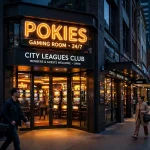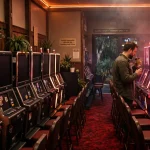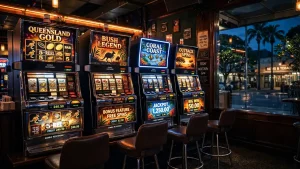
The phrase can refer to a local gaming venue, a casino gaming area or an online site, so the name alone cannot verify what is being offered.
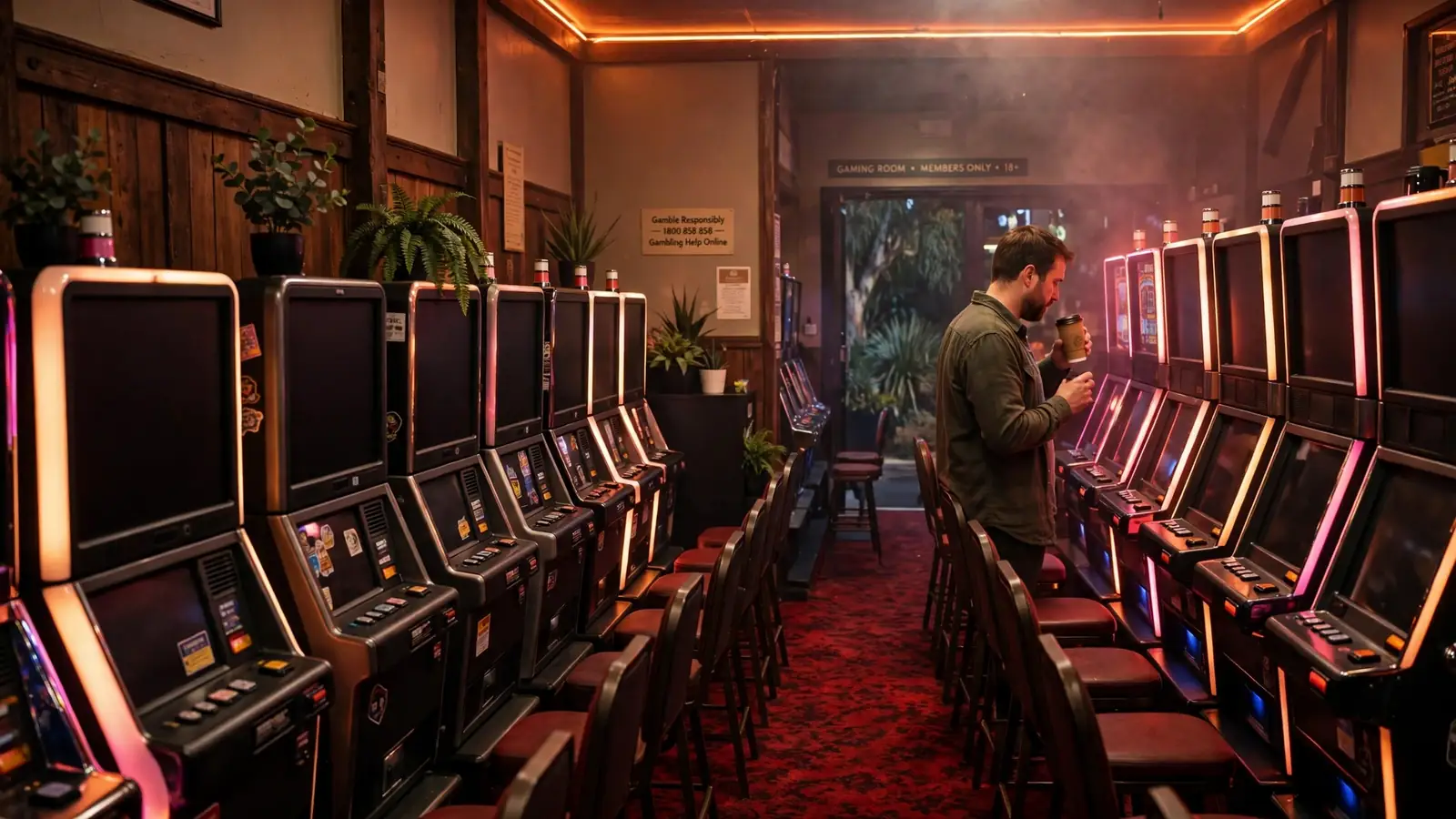
“Pokies parlour” sounds like it should mean a small room set aside for gaming machines. In everyday Australian usage, though, the phrase can point to different things: a local gaming venue, the gaming area inside a larger casino, or an online site borrowing familiar casino language. Those are not interchangeable. The name alone tells you little about what kind of place or service you are looking at.
When I hear someone talk about a parlour casino here, I first want to know whether they mean a physical venue or a website. A local casino is a real property, operating in a particular state or territory. Its gaming activities sit within that jurisdiction’s licensing framework: each casino property holds a licence issued by the local jurisdiction. That is the useful starting point, not the word “parlour” on a sign, page title or web address.
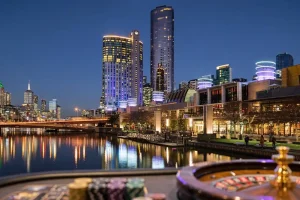
A physical venue may have gaming areas as well as other parts of the property. People sometimes use “pokie parlour” loosely for the area where machines are located, even when the venue itself is a casino rather than a standalone parlour. So if you are arranging a visit, check the venue’s actual identity and entry details rather than assuming the phrase describes a separate type of establishment.
If you’re looking for a pokies-style casino option in Australia, this list gives you a quick reference to the stated licensing and payment details. Use those details to guide what you check before choosing a site.
Lucky Dreams
You can make a minimum deposit of A$20 using POLi.
Ricky Casino
You can deposit from A$20, or A$30 to qualify for the bonus. The stated payout times are under an hour for crypto and 1–3 business days for PayID.
Neospin
You can note its stated Curacao Gaming Control Board licence, OGL/2023/176/0095, held by Hollycorn N.V.
Vegaz Casino
You can note its stated Curacao licence, OGL/2024/1335/0780, and minimum deposit of EUR 20.
LuckyVibe
You can note its stated Curacao Gaming Control Board licence, OGL/2023/176/0095, held by Hollycorn N.V.
DragonSlots Casino
You can note that it is licensed by the Curacao Gaming Authority, with Jumpman Gaming Ltd named as the operator.
SkyCrown
You can note its Tobique Gaming Commission licence and A$30 minimum deposit. Stated payout times are about 10–15 minutes for crypto and 1–5 days for fiat.
Uptown Pokies
You can note that it operates under a Curacao licence, has been operating since 2017, and has a minimum deposit of A$20.
SpinsUp
You can note its stated Curacao Gaming Control Board licence, OGL/2023/174/0082, held by Dama N.V.
7Bit Casino
You can note that it operates under a Curacao licence and is operated by Dama N.V.
There is a practical difference in opening hours, too. All major Australian casinos operate around the clock. That does not mean every part of a property offers the same experience at every hour, or that every place described casually as a gaming venue is a major casino. The phrase can travel further than the facts behind it. A label is not an opening-hours notice.
Age is another point that is straightforward: casino entry is restricted to adults, with the minimum set at 18 across Australia. If you are planning a visit, treat that as a nationwide baseline. The particular venue’s entry arrangements still matter, so check them before you go rather than relying on a casual description of a “parlour.”
The online meaning needs more care. A site can use words such as “casino,” “pokies” or “parlour” without being a local venue, and without that wording establishing its regulatory status. The visual style may resemble a casino floor; the language may sound unmistakably Australian. Neither turns a website into a licensed Australian casino. Online gambling has its own legal position, separate from the licensing of physical casino properties.
That distinction can be easy to miss because the same words do double duty. “Pokies” is familiar shorthand in Australia, while “parlour” suggests a dedicated place. Put them together and you might picture a room in a casino, a gaming venue, or an online brand. The phrase itself does not settle which one is meant. I would read it as a description someone has chosen, then check what is actually being described.
 Best pokies in Melbourne: venues, hours and locationsCompare Melbourne pokies venues by area, check location details and opening hours, and understand what “best” can mean before planning a visit.
 Best Aussie Pokies Online in Australia: What to KnowExplore free play, PayID, bonus terms and game-list claims. The Interactive Gambling Act prohibits real-money online pokies without a domestic licence.
For a real-world visit, the useful questions are ordinary ones: what is the venue, which jurisdiction is it in, and what are its entry conditions? For an online service, do not treat a familiar name or an Australian-sounding presentation as proof that it is an Australian casino. The distinction is not fussy. It changes what rules apply and what you can reasonably infer from the label.
So, in Australia, “pokies parlour” is best understood as informal wording rather than a precise legal category. It may refer to a physical gaming area or venue, while online pages can use similar language for something quite different. Once you separate those meanings, the basics are clearer: physical casino properties are licensed by their state or territory, major casinos operate 24 hours a day, and entry is for people aged 18 or over. The wording is familiar. The details still count.
Australia’s casino map is broad, but the numbers depend on what is being counted. A specialist gambling review describes more than 20 full-scale casinos across all eight states and territories. Treat that as a snapshot from one review, not a permanent census: venues open, close or change status, and a count of casinos is not the same thing as a count of every gaming venue.
The same distinction matters at city level. One specialist review puts gambling facilities in 147 Australian cities. That figure covers a wider category than full-scale casinos, so it should not be read as 147 cities with a casino. It gives a rough sense of how far gambling venues are spread, rather than a precise guide to what you can visit in each place.
Sydney is identified in that review as Australia’s largest gambling city, with 11 gambling facilities. The wording is worth keeping straight: facilities, not 11 casinos. A city’s total can include different kinds of venues, and a location count does not tell you what is open to visitors or what each place offers. If you are planning a visit, check the venue itself and its current entry arrangements rather than relying on a national tally.
The Northern Territory makes a useful smaller-scale example. A specialist review counts three casinos across three cities there, with Alice Springs listed as the city with the most: one casino. That does not mean the Territory has a dense casino strip. It means the venues are distributed across separate centres, so distance and transport matter more than the headline count. On a map, three locations can look like a neat set. On the ground, they are separate trips.
There is a practical reason not to treat these figures as a directory. They describe a reported landscape, not opening hours, access rules or the experience at a particular property. A casino’s location is only the first check; before setting out, confirm the address and visitor information directly with the venue. That is especially sensible when travelling outside a major city, where an outdated listing can turn into a long detour.
For a newcomer, the simple picture is this: full-scale casinos are spread around the country, while gambling facilities appear in many more cities. Sydney leads the cited city count, and the Northern Territory shows how casino locations can be separated across regional centres. Those are useful bearings, not a promise that every place in a list is a casino you can walk into. Check before you go. One less detour.
A venue name is easier to place once you pair it with a town and a clear location. These three examples sit in different parts of the country, and they make a useful small map-reading exercise: one in Alice Springs, one on the Gold Coast and one in Tasmania’s Meander Valley. They are examples, not a league table.
In Alice Springs, Lasseters Casino’s address is 93 Barrett Drive, Alice Springs, NT 0870, Australia. Put the full address into your map before setting off; the street number and postcode help distinguish the destination from a general search for the town or the venue name alone. If you are keeping a shortlist of places to visit, write the address beside the name rather than relying on memory. Small habit, fewer wrong turns.
Located at 93 Barrett Drive, Alice Springs, NT 0870, Australia.
Located on Broadbeach Island on the Gold Coast.
Located at Country Club Ave, Prospect, in Meander Valley, Tasmania.
On the Gold Coast, Jupiters Gold Coast Casino & Hotel is on Broadbeach Island. That gives you a specific area to orient around when placing the venue on a map. Keep the name and location together in your notes: “Jupiters Gold Coast” identifies the property, while Broadbeach Island gives the geographic point. It is a handy distinction when several places in a destination share broad labels such as “Gold Coast.”
The Tasmanian example is Country Club Casino, listed at Country Club Ave, Prospect, in Meander Valley. Here, the suburb or locality and the municipality name help give the address context. Entering the venue name alongside Prospect or Meander Valley is more useful than treating “Country Club” as a complete location on its own.
These are straightforward details, but they are the sort you want settled before making plans. I’d save each venue under its proper name and keep the location alongside it, especially if you are comparing places across states. That avoids mixing up a casino in the Northern Territory with one on the Queensland coast, or overlooking that the Tasmanian listing points to Prospect in Meander Valley.
The three locations also show why “casino near me” is a poor substitute for a specific destination when you are planning from elsewhere. Alice Springs, Broadbeach Island and Prospect are not interchangeable map pins. Start with the venue name, confirm the relevant town or area, then use the full address where one is provided. No grand itinerary required—just get the pin right.
Lasseters gives you a Barrett Drive address in Alice Springs; Jupiters places a named venue on Broadbeach Island; Country Club Casino ties its listing to Country Club Ave and Prospect. Three distinct points, and enough detail to tell them apart.
A sign-up offer can sound straightforward: create an account, then receive something to play with. A “no-deposit” label may suggest that no payment is needed to get started. But the wording of a promotion does not tell you whether the service behind it is lawful in Australia, or whether its terms work as the headline implies. Treat these claims as something to assess, not as an invitation to register.
That distinction matters because the Interactive Gambling Act 2001 prohibits operators from providing real-money online casino games to people in Australia. That covers online slots and other casino-style games. A sign-up bonus does not change the nature of the service, and “no deposit” does not make prohibited online casino gambling permissible. An offer can still be part of the promotion of a service that cannot lawfully be provided here.
There is also a practical problem with relying on a short promotional message. The headline may not explain what counts as qualifying play, whether the offer has conditions, or what happens to an account if those conditions are not met. Those details can matter to a consumer, but even clear terms would not establish that the underlying casino service is lawful in Australia. Fine print is not a substitute for legal status.
The regulator to know is the Australian Communications and Media Authority, or ACMA. It is the federal agency that enforces the Interactive Gambling Act and oversees compliance with Commonwealth interactive-gambling rules. When an operator provides or advertises a prohibited service, ACMA can investigate and take enforcement action.
ACMA also has a route to restrict access. It may ask Australian internet service providers to block websites that supply prohibited interactive gambling services or advertise them to Australians. The agency reports that, following enforcement action, it has blocked more than 1,455 illegal gambling and affiliate websites since November 2019. That figure describes blocking action; it does not mean every blocked website carried the same kind of offer or that a particular bonus has been individually assessed.
There is a reported discrepancy in another enforcement total. One account says that more than 210 illegal services withdrew from the Australian market after ACMA began enforcing the rules in 2017; another gives the figure as over 190. The totals do not match, so it would be misleading to present either as an uncontested count. Both describe reported withdrawals, not a guarantee that every service has disappeared or that every new domain belongs to a lawful operator.
A site may still load, show an account form, or display a promotion even when its service is prohibited. It may also use a different web address after access to another one is disrupted. None of those details proves Australian approval. A polished page and a working registration flow are just signs that a page is functioning; they do not settle whether the operator may offer online casino gambling here.
If you encounter a sign-up or no-deposit claim, separate the questions. What exactly does the wording promise? What service is being offered? And is that service one that an operator can legally provide to people in Australia? For online casino games, the legal position is not made uncertain by the promotional language: the Act prohibits operators from supplying them to Australians. The phrase “no deposit” answers neither the regulatory question nor the question of whether the offer will be honoured.
It is worth being cautious about messages that make a registration bonus sound like a safe way to test a casino. The offer may draw attention away from the more important issue: an operator’s obligation to comply with Australian law. Nor does a claim that a promotion is available to local visitors change that obligation. A local audience is precisely why the rules matter.
ACMA’s blocking powers and enforcement figures provide useful context, but they should not be read as a live directory of every site or promotion. Blocking can affect access to particular web addresses, while alternate addresses may appear over time. The address itself is not proof of legitimacy, and a bonus displayed there is not proof of a lawful Australian service.
So read the offer as a claim, not a recommendation. Look past the “sign-up” or “no-deposit” wording and consider the legal status of the activity it is attached to. The key point is not whether the promotion sounds generous. It is whether the operator is allowed to provide that online casino service in Australia.
A bonus claim can make a website look more established than it is. It tells you what the page wants you to notice; it does not tell you whether the service is lawful in Australia, who operates it, or whether the claim is genuine. I treat the word “bonus” as a prompt to check the context, not as proof that there is an Australian casino behind the page.
Start with the basic distinction: a physical casino and a website using casino language are not the same thing. A polished page, familiar-sounding name or Australian-themed wording cannot turn an online service into a licensed local venue. Nor does a promotional label explain what the service actually provides. Read beyond the headline, and be wary of pages that blur a real venue’s details with an online offer.
There is a further reason not to take a bonus claim at face value. The Australian Communications and Media Authority (ACMA) enforces federal interactive gambling laws and can ask internet service providers to block websites that provide or advertise prohibited interactive gambling services. ACMA has taken blocking action against illegal gambling services, including alternate domains associated with Fair Go. That is enforcement context, not a recommendation or endorsement of any site.
A changed web address does not settle the question either. Blocking can affect which domains load through Australian providers, while alternate addresses may appear later. A page being reachable—or a claim being repeated on another domain—does not establish that the service is an Australian-licensed online casino. Access and legal status are separate matters.
When you assess a bonus claim, look for who is making it and whether the page clearly distinguishes a physical venue from an online gambling service. Check whether the wording is specific about the offer, rather than relying on a banner or a copied headline. If the claim directs you toward online casino games for real money, remember that the Interactive Gambling Act 2001 prohibits operators from providing those games to people in Australia. That prohibition does not disappear because the page calls something a bonus.
I would not make a decision on the strength of a promotional label. It is not a venue address, a licence, or a regulator’s approval. Keep those things separate, and treat vague claims with care. The label is easy; verification is the work.
Words such as “free spins”, “free chips” and “free play” can make a page sound like it is describing a straightforward perk. They are only labels, though. On their own, they tell you nothing reliable about who is behind a site, what the offer means, or whether it is available to people in Australia.
I’d treat those phrases as claims to inspect, not as evidence that a genuine casino offer exists. A page may use the language of a promotion without clearly explaining who provides it or what the advertised benefit covers. The wording can also blur the difference between a land-based gaming venue and an online service. Those are not interchangeable.
Australia has 3,308 gaming machines installed in casinos under venue licences. That is a count of machines in physical casino venues; it does not indicate that any are available for free play, or that a website promising free spins or chips is connected to one. A national figure can give you a sense of scale. It cannot verify a particular offer.
The same caution applies when a page uses “free” loosely. It might refer to a marketing claim, a feature described on the page, or something that comes with conditions. Read the actual wording rather than assuming that a headline means you will receive a usable benefit. If the terms are absent, unclear or difficult to match to a named provider, there is little basis for treating the claim as dependable.
There is also a legal distinction worth keeping in view. Under the Interactive Gambling Act 2001, operators cannot provide real-money online casino games to people in Australia. Casino-style online games, including slots, poker and table games, fall within the prohibited services. A page’s promotional language does not change that position. Nor does calling something a chip, spin or free-play feature make it a lawful Australian online casino service.
I would not take a familiar casino-style look as proof, either. Branding, graphics and promotional language can be copied or used by sites with no connection to a local venue. The count of machines in Australian casinos is about licensed physical venues, not a guarantee about an online page using similar words.
If a claim is aimed at Australians, pause before sharing personal details or following instructions to register. Look for clear information about the operator and the nature of the service, and remember that an appealing label is not verification. “Free” is a word, not a credential.
A site loading on your phone can feel like a useful answer: the page is there, the buttons work, and perhaps you can even create an account. But access is not proof that the service is an Australian-licensed online casino. In Australia, the law prohibits operators from providing online casino-style games to people physically here. A familiar name, Australian-facing wording or working web address does not change that.
I’d treat the address as a way to reach a page, not as evidence of what stands behind it. A website may accept account traffic while still having no authorisation to provide those games in Australia. Nor does a polished layout tell you where the operator is based, what rules apply to it, or whether its claims are reliable. The screen can look local. That is not the same thing as being lawful here.
Domains can also shift. A specialist review reports that website blocking may affect which domains resolve through Australian internet service providers, and that alternate addresses can appear over time. That is a description of changing access, not a dependable map of legal status. One address may stop loading while another appears; neither event establishes that the service has become Australian-authorised. The internet is good at moving the sign over the door.
The Australian Communications and Media Authority (ACMA) enforces the federal Interactive Gambling Act 2001 and can ask internet service providers to block sites providing prohibited interactive gambling services, or advertising them in Australia. ACMA has taken blocking action against illegal gambling services, including alternate domains associated with Fair Go. Blocking is an enforcement measure; it is not a certification system for every site that remains reachable.
That distinction matters when a page describes itself as a “pokies parlour” online. The phrase may borrow the feel of a physical gaming venue, but wording does not turn an online service into a local casino. Likewise, finding a new address through a forum or a link shared elsewhere does not settle whether the operator may legally serve people in Australia. A redirect is just a redirect.
If you are trying to understand what a site is, read its claims with that boundary in mind. Look for the operator’s identity and the terms it publishes, but do not treat an address, an account page or a statement about overseas oversight as evidence of Australian approval. There is no Australian licence for online casino operators to provide real-money casino games to people here. A foreign licence, if claimed, does not override that restriction.
“Play online” can also mean very different things to different people. A page might show game previews, account functions or other content without proving that it is a lawful Australian online casino. Even when a site offers a mode described as free, that label alone does not establish the service’s legal status or explain what else the site does. Keep the claim separate from the evidence.
So, if a link opens today, all you know is that the page loaded through your connection at that moment. If it fails tomorrow, that does not tell you the whole story either. ACMA’s blocking actions and changing domains make access an especially poor shortcut for judging an operator. Check what the service is claiming, remember the Australian legal position, and don’t mistake a working address for local approval. Short version: access isn’t status.
A “VIP” label can sound like a promise of a separate room, personal service or special entry. By itself, it confirms none of those things. It may be promotional wording, a category used by a venue, or simply part of a page title. You need details from the venue itself before treating it as a real feature.
That distinction matters with parlour-style casino searches. A polished page can use familiar local language without establishing that a particular Australian venue offers VIP access or benefits. I would look for clear, current information from the venue and check that it actually describes the service being claimed. A badge or headline is not enough. Labels are easy; specifics matter.
There is one straightforward entry rule you can rely on: casino entry in Australia is limited to people aged 18 or over. That is a practical baseline, not a VIP qualification. Being old enough to enter does not prove that a venue has a VIP area, that access is available to every guest, or that any special treatment comes with it.
Keep those questions separate. First, establish what the venue itself says it offers. Then distinguish an ordinary entry condition from any claimed extra access. If the wording stays vague, don’t fill in the blanks yourself. “VIP” is not a description.
For me, the useful test is simple: can you point to a specific, current venue detail that explains what the label means? If not, treat it as wording, not a benefit you can count on. A little less glamour, a lot less guesswork.
“Parlour pokies” can sound like a separate kind of venue, but the phrase does not tell you how many machines a casino has or what its licence covers. For Australian casinos, a useful measure is the national count of gaming machines recorded as both endorsed on venue licences and installed on casino premises.
That total is 3,308. It gives you a sense of the scale across the country, but it is not a count for any one casino, nor does it show how machines are distributed between venues. The distinction matters: a national figure can provide context without telling you what you will find at a particular property.
I’d also keep the wording in perspective. “Parlour” may be used loosely when someone talks about a gaming area, but the word itself is not evidence of a separate licensing category. The count refers to machines in Australian casinos, not every gaming venue in the country, and not a catalogue of games or features.
So, if you come across the phrase while looking into casino machines, read it as casual wording rather than a precise description of a venue. The verified figure is a measure of the licensed and installed casino-machine total; it does not establish that every casino has the same setup, or that a specific parlour exists.
One figure, with limits.
A real-money casino page can load, display account features or appear under a different web address without being authorised to provide online casino games to people in Australia. Access is a technical detail, not evidence of Australian licensing.
The legal position is different from that of a gaming venue you can visit. Under the Interactive Gambling Act 2001, operators cannot provide real-money online casino games, including slots, poker and table games, to customers in Australia. A polished site, a familiar name or an account page does not change that rule. Nor does an alternate domain.
ACMA, the federal regulator, can ask Australian internet providers to block sites that provide prohibited interactive gambling services or advertise them. Regulatory reporting has also recorded ACMA blocking action against illegal gambling services, including alternate domains associated with Fair Go. That action can affect which addresses resolve for Australian users, and domains may change over time. A new address is not a new licence.
I treat these as separate questions: can the page be reached, and is the service legally allowed to offer real-money casino games here? The first answer can change with internet-provider blocking or a site’s domain choices. It does not answer the second. Don’t infer legitimacy from a working link, an account prompt or a claim that a previous address has moved.
If you are trying to understand a site’s status, rely on Australian regulatory information rather than the site’s own explanation of why it is available. That keeps a changing web address in perspective. Access can be temporary. Legality is not established by loading a page.