A practical look at Australian law, unverifiable providers and games, bonus terms, payments, mobile access and venue rules.

If you are looking at a live-casino site from Australia, the first thing to understand is that the local legal position is about the operator, not a local licensing system you can use to check a casino. The Interactive Gambling Act 2001 prohibits companies from providing real-money online casino services to people in Australia without a domestic licence. No Australian online casino licences have been issued, so there is no locally licensed online casino to compare with an offshore one.
That distinction matters. The law places the central obligation on the business offering the service; it does not make an individual player liable simply for using an offshore site that accepts Australians. But that does not turn the site into an Australian-regulated service, or give you the protections you might expect from a domestic licence. The operator’s willingness to accept a registration is not proof that its service is lawful to provide here.
For a person weighing up an online live casino, those points can sit awkwardly together: the law targets the operator, while a resident may still encounter an offshore site. I would not read the absence of a player penalty as an endorsement or a guarantee of safety. It only describes who the law is aimed at. The service remains outside Australia’s licensing framework, and there is no local online-casino regulator licensing providers for Australians.
Choosing a live casino online in Australia means checking the details that matter to you, such as licensing and payment requirements. Use these verdicts as a concise reference when deciding which operators to explore further.
Lucky Dreams
You can note that Lucky Dreams lists a Curaçao licence and a minimum deposit of A$20 via POLi.
Ricky Casino
Ricky Casino lists crypto payouts in under an hour and PayID payouts in 1–3 business days. You can deposit from A$20, though A$30 is required to qualify for the bonus.
Neospin
Neospin lists a Curaçao Gaming Control Board licence, OGL/2023/176/0095, held by Hollycorn N.V.
Vegaz Casino
Vegaz Casino lists Curaçao licence OGL/2024/1335/0780 and a minimum deposit of EUR 20.
LuckyVibe
LuckyVibe lists a Curaçao Gaming Control Board licence, OGL/2023/176/0095, held by Hollycorn N.V.
DragonSlots Casino
DragonSlots Casino lists a Curaçao Gaming Authority licence and names Jumpman Gaming Ltd as its operator.
SkyCrown
SkyCrown lists a Tobique Gaming Commission licence. You can expect listed payout times of around 10–15 minutes for crypto and 1–5 days for fiat; its minimum deposit is A$30.
Uptown Pokies
Uptown Pokies lists a Curaçao licence, says it has operated since 2017, and sets a minimum deposit of A$20.
SpinsUp
SpinsUp lists a Curaçao Gaming Control Board licence, OGL/2023/174/0082, held by Dama N.V.
7Bit Casino
7Bit Casino is listed as Curaçao-licensed and operated by Dama N.V.
The Australian Communications and Media Authority (ACMA) is the main domestic regulator responsible for enforcing the Interactive Gambling Act. Its enforcement approach includes blocking access to illegal offshore gambling sites. Internet service providers are required to follow ACMA’s blocklist, so a site that has been accessible at one time may not remain reachable through a normal Australian connection.
A block is an enforcement measure, not a consumer rating. It does not tell you that every unblocked site has been approved, checked for fairness or made safe to use. Nor does a site’s availability establish that it holds an Australian licence: there are no such online-casino licences. If access changes, treat that as a sign of the enforcement environment, not as a reason to search for a workaround.
This is where the phrase “best live casino online Australia 2026” needs a legal reality check. There is no Australian-licensed live-casino market whose operators can be ranked as local licensees. Any offshore site that accepts Australian residents is operating outside that domestic licensing structure. A polished interface, a familiar brand or an easy sign-up process does not change that status.
The part that can matter most to a player is what happens after a dispute. If an offshore casino refuses to pay winnings, an Australian player has no legal recourse in Australia against that operator. That is a significant difference from choosing a service subject to local licensing and local oversight. Before you put money at risk, be clear-eyed about the fact that a complaint may not have a useful Australian route to resolution.
I would also separate two questions that are often blurred together: whether a player is the target of the law, and whether the operator is authorised to provide the service. The law targets operators, not individual players; at the same time, it prohibits companies from providing the relevant real-money online casino services to people in Australia without a domestic licence. There is no local licence available for an online casino to hold. Both points matter.
The minimum legal age for gambling in Australia, including online gambling, is eighteen. Meeting that age requirement does not alter the operator’s position under the Act, and it does not create a local protection if a dispute arises. Age is a threshold, not a licence.
So, when considering live casino Australia options, start with the limits of the market rather than a sales pitch. ACMA enforces the law and can block offshore sites; Australian internet providers must comply with its blocklist. Offshore access may still be encountered, but it does not mean the site is licensed here, and it does not give you Australian legal recourse if the operator withholds winnings. That is the point to keep in view before any other feature enters the picture.
No local licence. No local fallback.
Software is an easy label to overread. A site may describe its live-casino section as polished, seamless or powered by leading technology, but those phrases do not tell you who made the software, what a particular site actually runs, or whether the service is suitable for Australian residents. I keep those questions separate. A confident sales line is not a technical check.
A live-casino platform is the layer through which a visitor reaches and uses a service. That broad description does not identify a supplier or prove how the product works behind the screen. A casino may display a provider name, but the name alone would not establish that every table, account feature or connection on that site comes from that provider. Nor does it tell you whether the same supplier is used across the whole site. Those details need direct, specific evidence.
That matters when you compare a live-casino software provider with a live-casino site. They are not interchangeable terms. One points to the company supplying some part of the software; the other is the service a customer encounters. A site’s own claims about its technology should not be treated as an independent assessment. If the supplier is not clearly identified, or the relationship between supplier and site is unclear, there is no sound basis for assigning the product to a particular company.
The same caution applies to rankings. Calling something the best live-casino software suggests that products have been compared against a consistent set of measures. Without evidence about what was compared and how, “best” is decoration, not a finding. A ranking also cannot settle whether a service is lawful for someone in Australia. Software quality and permission to provide real-money online casino services are different questions.
I would look for plain, checkable statements rather than adjectives: who supplies the software, which part of the site it applies to, and whether the statement is backed by material that can be examined. Even then, one statement should not be stretched into another. A named supplier does not by itself demonstrate fair outcomes, independent testing, secure handling of information, or a site’s financial reliability. Those claims call for their own evidence. A logo is not an audit.
This is especially important with claims about fairness. Software branding cannot tell you how an individual outcome is generated or whether a particular service has been independently assessed. It would be careless to infer either from a provider label, a smooth interface or a site’s description of its product. I would want a clear explanation of what was tested, by whom, and what the result covers before treating a fairness claim as established. Without that, the claim remains a claim.
Some readers are looking for a free way to try a live-casino service. The word “free” can refer to different things, so it is worth checking what the offer actually means rather than assuming it gives access to the same service as real-money play. A demonstration or promotional label, where one is offered, would not establish the software supplier, prove fairness, or make a real-money service lawful in Australia. Free wording is not a substitute for knowing what is being provided.
The phrase “live-casino solution” can be just as broad. It might describe a technical product offered to an operator, a set of tools, or a complete service, depending on the person using it. Without a precise description, the phrase tells you little about what is included. I would not treat it as proof that a site has a particular platform, that all parts of its service come from one supplier, or that the product has been checked against a meaningful standard.
You may also encounter material aimed at people in Singapore or another market. A description written for one country does not establish that the same service is available, lawful or configured in the same way elsewhere. For Australians, the local legal position matters more than a regional label or a supplier’s international reach. That is a practical distinction, not a technical one.
So when someone asks me to name the best provider, I start by asking what evidence supports the comparison. If the answer is only branding, promotional language or a general claim about technology, I would not turn it into a recommendation. The careful approach is to keep the supplier, the site, the software claims and the Australian legal question distinct. They are related, but none proves the others. A name alone tells you very little.
Poker can appear in descriptions of live casino platforms, but a provider name alone tells you very little about what a player can actually access. It does not establish which poker products are offered, how they work, or whether two sites use the same version. A polished label is not a comparison.
The distinction matters because “provider” and “platform” describe different parts of the picture. A provider may supply a product; a platform is the surrounding service through which an operator presents it. An API integration is a technical connection between systems, not evidence by itself of a particular poker format, table selection or playing experience. Those details need to be stated and substantiated separately.
That is why a list of live casino providers would be more noise than guidance unless it were tied to confirmed poker offerings and meaningful product details. The same goes for reviews: a review that names a supplier without explaining what was checked does not tell you whether poker is available, what distinguishes the product, or whether the description applies to Australian users. I would not treat a logo or a supplier name as proof.
There is also a legal boundary that matters more than the terminology. The Interactive Gambling Act 2001 prohibits operators from providing real-money online poker and other casino-style games to people physically in Australia. There is no Australian-licensed online casino. The law is directed at operators rather than players, but that does not turn an offshore poker offer into a locally regulated service. If an offshore operator refuses to pay, an Australian player has no legal recourse in Australia.
So, when you see a claim about live poker, separate three questions: what is being described, who is said to supply it, and whether the claim applies to the Australian market. A provider name may answer only the second—and even then, only if the relationship is clear. It does not establish that a particular poker product is available to you or that another supplier’s product is better.
The same caution applies to claims about a live casino login or mobile access. Those are matters of access, not proof of the poker product behind the screen. A login page cannot demonstrate the game’s provider or explain how its offering differs. Keep the claims in their own boxes.
In Australia, that distinction is not just technical housekeeping. Online casino poker offered for real money sits within a prohibited service category, and there is no domestic casino licence to look for as reassurance. Provider comparisons cannot change that legal position. Nor should a list of names be mistaken for an endorsement or an invitation to play.
For a useful comparison, you would need clear, product-specific information: the poker offering being described, the supplier’s role, and the market the claim concerns. Without those details, provider rankings risk giving a false sense of certainty. Better to leave the ranking out.
“Live” can sound like a precise promise, but by itself it tells you very little about what a site actually offers. It is a broad label, not a description of a particular game, its rules, or the way a session works. If you are comparing online casino pages, read the wording on the specific page rather than treating a category heading as proof of what is available.
I’d keep three questions separate: what the site calls its live games, what it says about how they work, and what terms apply if you use the service. Those details are not interchangeable. A polished category page does not, on its own, establish the quality of a game or tell you what happens when you try to withdraw. Nor does the word “live” answer practical questions about access, eligibility or account checks.
The same care applies to claims about game shows or other themed formats. A label can describe a style of presentation, but it is not enough to establish the rules, pace or mechanics. Don’t infer those details from a thumbnail, a short title or a promotional line. Look for the full description and rules before making a decision. If those are unclear, that is a reason to pause—not a puzzle you need to solve by depositing.
For Australian readers, there is a bigger context than the menu. The Interactive Gambling Act 2001 prohibits operators from providing real-money online casino games to people in Australia. That includes casino-style games offered online, rather than only one particular format. The legal issue sits with the operator, not with a player simply for playing; that does not make an offshore service an Australian-licensed casino or give you local recourse if it withholds winnings.
I would not treat a site’s broad catalogue claims as a shortlist. A category page may group different products under one heading, while the details you need sit elsewhere in the terms or rules. Check what the operator says about eligibility, verification and withdrawals before opening an account. Identity and address documents may be required before a first withdrawal, so don’t wait until you are trying to cash out to find out what the process involves.
There is also a limit to what account-protection tools can do across borders. BetStop applies to Australian-licensed operators; it does not bind offshore sites. That distinction matters if you are relying on self-exclusion to prevent access.
A search for a broad range of live options can lead you to pages that sound more definite than they are. Read the actual rules, take promotional language at face value only where it is backed by clear terms, and don’t assume that a category label settles the important questions. The label is the easy part.
If you are looking for roulette dealt live online, start with the Australian rules, not a table description. Under the Interactive Gambling Act 2001, providing real-money online casino games to people in Australia is prohibited. Roulette is part of that category, whether it is presented as a live table or another online format. There is no Australian-licensed online casino.
That puts the usual “best site” question in an awkward spot. A polished page or a claim that a table is available to Australians does not make the service locally licensed, and it is not a reason to treat the offer as safe. The law is directed at operators rather than individual players, but that does not give you the protections you would have with a domestic casino. If an offshore operator refuses to pay, you have no legal recourse in Australia.
The practical position matters too. The Australian Communications and Media Authority enforces the Act and blocks access to illegal offshore gambling sites; internet service providers must comply with its blocklist. A site that loads for one person, device or connection is not proof that it is authorised, dependable or likely to remain accessible. Access can be an unreliable measure of anything except access.
I would be wary of treating roulette labels as meaningful evidence. “Live” tells you how a site markets a product, not whether the operator is licensed here or whether you can resolve a dispute locally. A list of tables, a welcome offer or a confident-sounding review cannot change the legal position. Nor should a payment option be read as proof of fairness or transparency.
Before putting money anywhere, consider what happens if the account is restricted, a withdrawal is refused or the service disappears from view. Australian players are not protected by a local online-casino licensing system, because none exists. A site’s own terms may describe its procedures, but those terms do not create Australian legal recourse. Read them with that distinction in mind.
Keep the decision narrow: you are not comparing local roulette venues with one another. You are considering an online service that Australian law prohibits operators from supplying to people here, alongside access restrictions and limited remedies for players. If you choose not to proceed, that is the clearest way to avoid the payment and dispute risks. If you do explore an offshore offer, do not mistake availability, advertising or a bonus for local oversight.
For anyone trying to make a quick shortlist, there is no responsible shortcut in a name or table label. Check the legal position first, and be honest about the protection you would not have. Roulette can wait.
A live dealer suggests a person presents a game through a video stream while players take part online. That description alone tells you very little about what a particular site actually provides. It does not confirm that a dealer is available, that a particular table is running, or that the stream and play work in any particular way.
I would separate the idea of a dealer-led session from the wider questions of software and game choice. A person appearing on screen does not, by itself, tell you which company supplies the underlying product, how the game is operated, or what rules apply at the table. Nor does a polished-looking page establish that a named dealer-led option is available to Australian residents. Those details need to be checked for the specific service, not inferred from a label.
The same caution applies if you have a particular format in mind. A page using broad live-casino language does not establish that it offers the table you want, or that the option is available when you visit. I would not treat a photograph, promotional wording or a general category heading as proof of a working table or an actual dealer. A screen can look convincing. That is not the same as verification.
There is also a more important limit for Australians: real-money online casino services, including dealer-led casino games, are prohibited when offered to people in Australia. No Australian-licensed online casino operates under the current framework. The law targets providers rather than individual players, but a person playing with an offshore operator has no Australian legal recourse if it withholds winnings. That is a poor safety net.
So, before relying on any claim about an online casino with live dealers, distinguish what the site says from what can be independently established. Do not assume that an offshore service is locally licensed, protected by Australian rules, or accountable here. PayID support would not prove licensing, fairness or openness about a game’s return settings either.
If you have self-excluded through BetStop, remember that it applies to Australian-licensed operators and does not bind offshore sites. It should not be treated as a control that will prevent access to an offshore casino.
For me, the sensible question is not whether a dealer-led experience sounds more personal than a standard online game. It is whether the service can be checked, what protection exists if something goes wrong, and whether taking that risk makes sense. In Australia, the legal and practical limits matter more than the promise of someone dealing on screen. A camera is not oversight.
A live casino bonus can look generous until you read the condition attached to it. The key figure is the wagering requirement: the amount you must bet before bonus-related winnings become withdrawable. I’d treat the headline amount as secondary and work out the turnover first.
One specialist review recommends looking for a requirement of 35x or less and describes anything above 40x as punishing. That is the review’s assessment, not a rule that applies to every offer. The calculation also depends on what the multiplier applies to: the bonus alone, or your deposit plus the bonus. Check the wording rather than assuming.
Bonus Wagering Calculation
Identify the multiplier
Determine the wagering requirement (e.g., 40x) and what it applies to (bonus only or deposit plus bonus).
Calculate the turnover
For a $500 bonus with a 40x requirement, multiply 500 by 40 to find the required $20,000 in bets.
Compare with deposit+bonus
If the 35x requirement applies to a $500 deposit plus a $500 bonus, the required turnover increases to $35,000.
The arithmetic makes the difference plain. In an example cited by a specialist review, a $500 bonus with a 40x requirement means $20,000 in bets before winnings can be withdrawn. If the terms apply 35x to a $500 deposit plus a $500 bonus, the required turnover is $35,000. That is a lot of wagering attached to money that may not be yours to keep. Read the definition of eligible bets and any expiry conditions in the offer itself; don’t infer them from the banner.
Free spins need their own check. A specialist review notes that an offer of this kind may cap the winnings you can cash out. So even if play produces a balance, the amount available to withdraw may be limited by the terms. Look for the cap before opting in, alongside any wagering rule.
For an Australian reader, there is a more basic point: a bonus does not change the legal position of an offshore online casino. Australian law prohibits operators from providing real-money online casino games to people in Australia. Players are not the target of that law, but if an offshore operator refuses to pay, you have no legal recourse in Australia. A bonus is not protection.
Before any withdrawal, be ready to complete identity checks. Verify what documents the operator requires, including proof of identity and address, before you deposit or accept an offer. If the terms are hard to find, or the arithmetic is unclear, leave the bonus alone. The fine print is the offer.
Before you move money, separate the payment method from the service accepting it. PayID is a way to address a bank transfer, not evidence that a gambling site is licensed, fair or transparent. Real-money online casino services are prohibited for operators under Australian law, so payment convenience should not be treated as a reason to use an offshore casino.
PayID sits on the New Payments Platform (NPP). It lets you send a transfer using an email address, mobile number or ABN rather than entering a bank account number and BSB. The NPP is supported by all major Australian banks and uses end-to-end encryption. To use PayID for a real-money casino deposit, you must first link your PayID to a bank account.
That setup matters: PayID is not a separate balance or an anonymous wallet. The money still comes from the linked bank account, and the transfer is subject to that bank’s rules. Do not assume that a payment route shown on a site will work from your account, or that a successful transfer says anything about the site’s status.
There is also the possibility of a bank block. A specialist review has reported that some Australian banks, including the Big Four, sometimes stop PayID transfers to gambling merchants they recognise. That is a reported possibility, not a promise that your bank will block a particular transfer—or allow it. Check directly with your bank if you need to understand its current payment controls; don’t try to disguise the recipient or route a payment around a block.
I would also pause before entering bank details on any offshore site. Check who is receiving the funds, what the payment page says, and whether the account name matches the stated recipient. If anything is unclear, do not send the transfer. A payment screen is not a safety check.
Keep a record of any transfer and the terms shown at the point of payment. If a payment is delayed or disputed, contact your bank through its official channels. The key point is simple: PayID can make a transfer easier to address, but it cannot make an unlawful service safe or give you a local remedy if an offshore operator keeps your money.
A site that opens on a phone is not necessarily offering a dedicated app. Those are different things, and an app download should not be treated as proof that a service is legitimate, suitable for Australian residents or safe to use. I would not install a file simply because a page labels it an official live-casino app.
Before downloading anything, check who publishes it and where the link leads. A download hosted outside a recognised app store calls for extra caution: installing it may give software access to your device, and removing it later does not undo information already shared. Do not hand over account details or identity documents through a page you cannot independently identify. If you cannot establish who operates the service, stop there.
The same care applies when someone mentions a live-casino API. An API is a technical connection, not evidence that an app exists, that a mobile version is available to you, or that the service has been checked for Australian use. A technical label does not settle those questions.
There is a more important local point than screen size. Under the Interactive Gambling Act 2001, operators cannot provide real-money online casino services to people in Australia. The Australian Communications and Media Authority blocks access to illegal offshore gambling sites, and internet providers must follow its blocklist. A site loading on a phone does not change the legal position or remove the risk of losing access. BetStop applies to Australian-licensed operators; it does not bind offshore sites.
If you are assessing an account before any withdrawal, check what identity verification will be required. Be ready to provide proof of identity and address before your first withdrawal, and do not assume that an app removes that step. Nor does a mobile interface tell you whether a withdrawal will be paid.
I would keep the decision simple: do not infer app availability from a mobile-friendly page, and do not treat a download, an API reference or a polished screen as a safety check. For Australian residents, access is not approval.
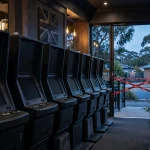
Live casino searches can blur two different things: an online service viewed from home and gambling at a physical venue. The rules discussed here concern venues with gaming machines; they do not describe how an online table works or what it offers.
A report by regionriverina.com.au says that, from 1 July, a venue operating more than 20 gaming machines must have a dedicated responsible gambling officer (RGO) present while those machines are running. The role is tied to the venue floor and its operation, rather than to a remote casino stream.
The report also describes a one-month grace period for venues to take down signage and put the officer arrangements in place. That transition is a venue-management matter, not an online product feature. Small distinction, important one.
If you are comparing live casino options in Australia, keep the venue rules in their lane. They do not turn an online service into a physical gaming venue, and they do not establish that an online casino is authorised. The same applies when a search mentions live casino in the UK: the phrase alone does not tell you which country’s rules govern a service or where its customers are located. Location matters.
At a local club or other gaming venue, the RGO requirement is about having someone on duty while machines operate. It is a practical obligation for the venue, not a promise about the conduct of every patron or the outcome of play. Keep those settings separate when reading about live casino: an on-site rule should not be mistaken for evidence about an online service.
E-wallets such as Skrill and Neteller are popular for their speed, but that does not guarantee a fast withdrawal from a casino.
Check the wagering requirement before valuing a bonus: a $500 bonus with a 40x requirement means $20,000 in bets before you can withdraw winnings. If the 35x requirement applies to a $500 deposit plus a $500 bonus, you would need to bet $35,000.
You must be at least 18 to gamble online in Australia.
The law targets operators, not individual players: Australians can legally play on offshore sites that accept them, but companies cannot offer real-money online pokies to Australian residents without a domestic licence. No Australian online-casino licences have been issued.