A practical guide to reading game features and understanding the legal limits around online and casino-floor pokies in Australia.
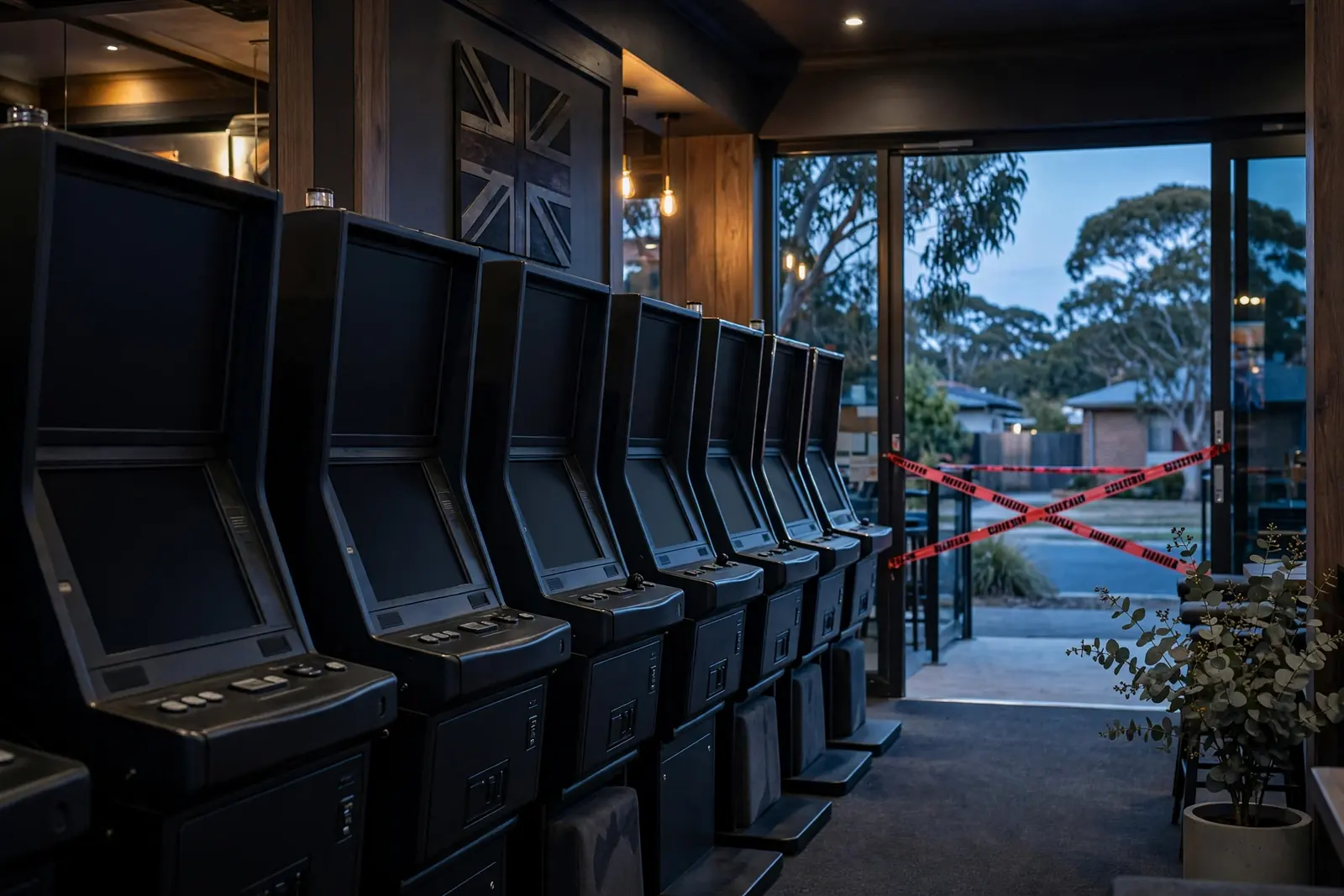
The legal line is straightforward: businesses cannot lawfully offer real-money online pokie machine games to people in Australia. The Interactive Gambling Act 2001 places the offence on the operator providing the service. There is no Australian licence available for a company to offer online pokies for real money to local residents.
That distinction matters if you are looking at a pokie machine online and wondering who the law applies to. An Australian resident does not commit an offence under the Act simply by playing real-money games through an offshore operator. The prohibition is aimed at the business supplying the service, not at the individual player. That does not make an offshore site an Australian-licensed casino, or give it local approval to offer online pokies here.
A familiar website, polished mobile layout or broad catalogue of online pokie machine games does not change the legal position. Nor does a foreign licence turn an offshore operator into a locally authorised provider. The relevant question is whether the operator is offering prohibited interactive gambling services to people in Australia. For real-money pokies, that offer is not lawful.
If you’re looking for pokie options in Australia in 2026, check the available operator details before choosing where to play. This list gives you a quick reference to the licensing and payment information provided for each option.
Lucky Dreams
Lucky Dreams lists a Curacao license and a minimum deposit of A$20 using POLi. These are the available details to consider when reviewing it.
Ricky Casino
Ricky Casino lists crypto payouts in under an hour and PayID payouts in 1–3 business days. The minimum deposit is A$20, or A$30 to qualify for the bonus.
Neospin
Neospin is listed with a Curacao Gaming Control Board license, OGL/2023/176/0095, held by Hollycorn N.V. The license is the available detail for your review.
Vegaz Casino
Vegaz Casino lists Curacao license OGL/2024/1335/0780 and a minimum deposit of EUR 20. You can use these details to inform your review.
LuckyVibe
LuckyVibe is listed with a Curacao Gaming Control Board license, OGL/2023/176/0095, held by Hollycorn N.V. No other operator details are provided here.
DragonSlots Casino
DragonSlots Casino lists a Curacao Gaming Authority license, with Jumpman Gaming Ltd named as the license holder. This is the available information for your review.
SkyCrown
SkyCrown lists a Tobique Gaming Commission license. Its stated payout times are around 10–15 minutes for crypto and 1–5 days for fiat, and its minimum deposit is A$30.
Uptown Pokies
Uptown Pokies lists a Curacao license, has operated since 2017, and has a minimum deposit of A$20. These are the available details to consider.
SpinsUp
SpinsUp is listed with Curacao Gaming Control Board license OGL/2023/174/0082, held by Dama N.V. No other details are provided here.
7Bit Casino
7Bit Casino is listed as operating under a Curacao license, with Dama N.V. as operator. This is the available licensing information for your review.
The Australian Communications and Media Authority, usually shortened to ACMA, oversees compliance with federal interactive gambling laws and enforces the Interactive Gambling Act. Its role is not limited to issuing public warnings. When a service appears to breach the rules, ACMA can take enforcement action and ask Australian internet providers to block access to the website.
That power covers sites supplying prohibited interactive gambling services and sites advertising them in Australia. A block is an access measure, not a new local licence or a sign that the underlying service has become acceptable. Offshore operators may change web addresses, but that does not alter the rule governing their offer to Australian residents.
ACMA’s published enforcement figures show the scale of that work: since November 2019, it has blocked more than 1,455 illegal gambling and affiliate websites after taking enforcement action. The agency has also reported that more than 210 illegal services withdrew from Australia after it began enforcing the rules in 2017. Reports do not agree on the withdrawal total: another version puts it at more than 190 services since 2017. The figures are not identical, so neither should be presented as an uncontested count.
Website blocking can make an offshore service harder to reach, but it does not settle every practical question about a particular site. It does explain why a search for real pokie machine games online may lead to pages that are inaccessible, move to another address or carry claims that sound more reassuring than they are. A site’s own description is not a substitute for the law.
You may come across a free online pokie machine or a simulator that lets you try a game without staking money. The legal issue described above concerns the provision of real-money online gambling. A free-play label does not, by itself, establish what a particular service offers or how it operates, so it is worth distinguishing a no-stake game from a real-money offer rather than treating every pokie machine software page as the same thing.
Search results can also mix game information, advertising and links to offshore operators. ACMA’s blocking powers extend to websites advertising prohibited services, as well as the services themselves. That is why an advertisement or a page explaining pokie machine paylines should not be read as evidence that real-money play is authorised in Australia.
I would keep the basic distinction in view: the operator cannot lawfully offer real-money online pokies to Australian residents, while the resident who plays through an offshore operator is not committing an offence under the Interactive Gambling Act 2001. Those are separate points, not a contradiction. The first describes the provider’s legal position; the second describes the player’s.
For anyone checking a site, claims about an overseas licence, access from an Australian address or a large choice of online pokie machine games do not override that distinction. ACMA’s enforcement and blocking actions are part of the federal response to services offered in breach of the Act. The law is about the offer, not how convincing the page looks.
A pokie can make a short run feel like a story. You get a few wins, then a string of misses, and it is tempting to think the machine is warming up—or due to pay. I’ve caught myself reading meaning into a screen that wasn’t giving me any. The useful thing to remember is simpler: each spin is generated by a random number generator, and each result is independent of the one before it.
That means a run of losses does not make a win more likely on the next spin. A run of wins does not make another win more likely, either. The machine is not keeping score of how long you have been playing and adjusting the next result to make things even. Past outcomes have no influence on future ones.
This is easy to understand in principle and surprisingly easy to forget in the moment. After a losing streak, “it has to pay soon” can sound like a sensible read. It is not. The next spin has no obligation to make up for the last one.
The same goes for a machine that has just paid out. A recent win may make you feel that the game is on a roll, but it tells you nothing reliable about what comes next. A pokie machine does not become more generous because you have noticed a pattern, and a quiet stretch does not reveal that a result is waiting just around the corner.
You can watch the symbols, track a sequence or remember a particular result. Those details describe what has already happened; they do not provide a forecast. If a screen shows several similar outcomes in a row, the next spin is still independent. Pattern-spotting is a human habit, not a way to see inside the random number generator.
That matters when you are choosing what to play. There is no dependable way to identify the best pokie machine by watching someone else’s session, or by checking whether a machine has recently paid. A run of results is not evidence that a particular game is about to deliver a win. Nor can a machine’s silence tell you that it is “holding back” a prize.
I find it helps to separate what you can observe from what you can know. You can see the outcome of each spin. You can notice that your session has included wins or losses. But you cannot use that history to calculate which result the next spin will produce. The game gives you a result, not a clue.
This applies whether you are looking at one pokie on a casino floor or playing a pokie on a screen. The presentation may differ, but the central point does not: the previous spin does not steer the next one. A player’s hunch can be entertaining; it is not an edge.
So if a friend says a machine is “due”, take that as a feeling, not a fact. If you hear that a game is “hot”, the label still does not tell you what the next spin will do. People naturally remember striking runs and forget how many ordinary spins came before them. A vivid memory can feel like a pattern without being a prediction.
The same caution applies to claims based on a small stretch of play. A few outcomes cannot show that a pokie has changed its behaviour or that you have found a reliable way to call the next result. In a short session, chance can produce clusters that look meaningful. They remain a record of that session, not instructions for the next one.
When you play, treat each spin as a fresh, uncertain event. Don’t chase a result because you think a losing run must end, and don’t assume a win means another is coming. That is not pessimism; it is just a clear view of what the spin can tell you. Not much about the next one.
When a pokie offers a demo or free-play mode, use it to learn the game’s layout—not to decide what it will pay when money is involved. You can see how the screen is arranged, try the controls and get a feel for the pace without staking money. That makes a free pokie machine useful for getting oriented. It does not make the results a forecast.
I find it helps to start with the basics on screen. Check where the spin control is, how the bet settings are displayed and whether the game explains its symbols or features in a help panel. Then play a few demo spins at a steady pace. The point is to understand what the game is asking you to do, not to chase a result that looks promising.
The reels and the theme are part of that first impression, too. A game may look busy, with animations and sound competing for your attention, or it may be comparatively plain. In free play, you can decide whether the presentation suits you before putting money at risk. If you cannot work out what a symbol or feature means, look for the game’s rules rather than guessing. A flashy screen is not an explanation.
There is a limit to what the test tells you. Demo results are not indicative of real-money outcomes. A run of wins in free play does not mean the game will be generous when you stake money; a stretch of losses does not mean a better result is due. Treat the demo as a way to inspect the experience, not as a sample of future luck.
That distinction matters because free-play mode can feel convincing. The same artwork, sounds and animations may be present, so it is easy to slip into thinking you have already seen how the game behaves. You have seen its presentation and some possible outcomes. You have not learned what your own real-money session will produce. Different session, different results. Simple as that.
A useful test is to ask yourself practical questions while you play: Can you find the rules? Do you understand what changes when you alter a setting? Is the pace comfortable, or does the game’s presentation make you want to rush? If something remains unclear, pause and read the information provided by the game. You are not under any obligation to keep playing just because you started a demo.
This is also where “free” needs a little care. A demo is play without staking your own money. It is not the same thing as a bonus or a free-spin offer attached to a real-money account; those can come with conditions. Keep the two ideas separate. Here, the useful question is whether you can get familiar with the game before deciding whether you want to play it at all.
You may see searches and listings that talk about pokie machine software, or even a pokie machine for sale. Those are different things from trying a game in a browser or on a screen. A demo lets you explore the game’s presentation and controls; it does not mean you are buying a physical machine or getting a copy of the underlying software. The wording can be muddled, but the distinction is straightforward.
As for pokie machine strategies, a demo can help with one modest kind: learning where the instructions are and how to use the controls without fumbling. It cannot reveal a trick for predicting results. Nor does a demo turn a game’s theme, reels or apparent rhythm into a reliable guide to what comes next. Use the free mode to make a more informed choice about whether you like the game, then leave its results where they belong: in the demo.
If you’re looking for a pokie machine in Perth, Crown Perth is the city’s only legal land-based casino. Its floor has more than 2,500 gaming machines, so there is no shortage of choice. The useful question is not which machine has the flashiest cabinet, but what information you can check before you sit down.
Western Australian rules require every legal pokie to show its rules, paylines and prize table. Take a moment to read those screens rather than relying on the game’s name or artwork. The rules explain how a win is formed; the paylines show which symbol arrangements count; and the prize table sets out the listed prizes for qualifying combinations. That gives you a concrete way to compare games on the floor.
It is worth separating a prize table from RTP. A prize table describes the game’s listed wins, while RTP is a longer-term measure. Most machines at Crown Perth operate within an RTP range of 87% to 92%, but Crown does not provide a machine-by-machine RTP list. So you cannot use a published Crown list to identify a particular machine as the highest-paying one. The range is useful context, not a guarantee about what a machine will return during your visit.
That distinction matters when someone calls a game the “best Australian pokie machine” or points to one as a high-payout choice. Those labels do not tell you the exact settings of the machine in front of you. Check the information shown on that game, and treat the broad floor-wide RTP range as just that: a broad range. A casino pokie machine may share a title with another version, but a title alone does not establish that every machine has identical settings.
I’d make the check in a simple order: find the game’s rules, see how its paylines work, then read the prize table before choosing a stake. If any part is unclear, ask staff rather than guessing from the screen graphics. Big symbols and a busy display are decoration; the rules panel is where the useful detail sits. Glamorous, but not especially informative.
The same approach helps if you are comparing pokie machine payouts. A prize table can show what combinations are worth, but it does not tell you how often those combinations will appear. Nor does the overall RTP range let you predict the result of a particular session. Keep those limits in mind and you can compare the stated information without mistaking it for a promise.
A pokie machine simulator or a game’s on-screen demonstration may help you understand its layout, but it cannot tell you what will happen on the casino floor. For a machine at Crown Perth, the most reliable details available to you there are the rules, paylines and prize table displayed for that game. Use those to understand what you are choosing—not to predict what it will pay.
Two pokie titles can look similar on the screen and still play quite differently. The useful details are in the rules: how winning lines are arranged, which symbols pay, and what happens when a feature is triggered. I check those before settling into a game; the title and artwork tell you very little about its structure.
Paylines are the patterns across the reels that count as winning combinations. Some games use a fixed number of lines, while others let you choose how many to activate. That choice can change how your stake is divided across the game, so check the bet settings as well as the paytable. A displayed line count is not, by itself, a guide to how much a symbol combination pays.
The paytable sets out the values assigned to symbol combinations and explains the game’s special rules. One pokie might pay differently from another even when both use familiar symbols or a similar reel layout. Look for the symbol values, the combinations required for a win, and any conditions attached to a bonus. If a rule is unclear, the help screen is worth the pause. It is easier to read before a spin than to guess afterwards.
Feature-buy options change how you enter a bonus round. Where a game offers this choice, you pay an extra amount to trigger the feature immediately rather than waiting for it to appear during ordinary play. A specialist review describes some such options as priced at 50 to 100 times the base bet, but that is not a universal setting: the cost and feature depend on the particular game. The feature is often free spins, though its rules still come from that game’s own paytable.
Before using a feature buy, check exactly what the price is based on, what bonus it starts, and whether the game offers different feature choices. A large multiplier beside a button is easy to overlook when you are focused on the bonus itself. The price is part of the stake, not a separate free entry.
For free-play versions, the same menus can help you learn where the paytable and feature rules sit, but they are not a preview of real-money results. Demo outcomes do not indicate what will happen when money is staked. Use the practice mode to understand the controls and rules, not to judge what a bonus is likely to return.
In short, compare the mechanics rather than the theme. Paylines tell you which patterns count; the paytable tells you what they are worth; and a feature-buy button tells you the cost of skipping the wait. Small print, big difference.
RTP is a long-run figure, not a forecast for your next session. It describes the share of all the money wagered on a game that is returned to players across a very large number of spins. That scale matters: your own play is only a small slice of the total, so the figure cannot tell you what will happen tonight.
A higher RTP can look like a straightforward way to choose the best pokie machine to play, but it does not make a game a reliable way to win. A high figure gives no guarantee of short-term returns, and individual sessions can vary widely. I treat RTP as one piece of information, not a promise hidden in the game’s settings.
For a concrete illustration, a specialist review lists Gates of Olympus at 96.5% RTP and Sweet Bonanza at 96.48%. Those are figures reported by that review, not a guarantee for every version of either game. The game version and its settings matter, so check the RTP shown for the specific pokie you are considering rather than assuming every listing refers to the same setup.
Volatility describes a different part of the experience. Lower-volatility games tend to pay smaller amounts more often; higher-volatility games pay less often but can produce larger wins. Neither label tells you what your next result will be. It helps describe the pattern of payouts, not the certainty of getting one.
That distinction is useful when you are deciding how to play a pokie machine. If you prefer more frequent, smaller returns, a lower-volatility game may suit your preference. If you are comfortable with less frequent payouts and the possibility of larger wins, a higher-volatility game may feel closer to what you want. Those are different styles, not a ranking of which game is best to win on.
Pokie machine odds are easy to misread when RTP and volatility get bundled together. RTP is about the long-run share returned across vast play; volatility is about how payouts are distributed. A game can have a high RTP and still feel rough over a short session. Conversely, frequent small payouts do not mean a game will return more overall.
So when comparing games, read both labels for what they actually say. RTP gives a long-run measure; volatility gives a broad sense of payout rhythm. Neither can turn a short session into a predictable result. A pokie’s sounds and animations may make a win feel close, but they do not change what its RTP or volatility means. Numbers first. Hype later.
Putting money into an online pokie is a different proposition from trying a game for free. If you choose to play with an offshore operator, the Interactive Gambling Act 2001 does not make you, as the player, guilty of an offence. That does not give you the protections or practical options you might expect when dealing with a local business.
The main catch tends to appear when something goes wrong with your money. If an offshore casino refuses to release winnings or disputes a withdrawal, an Australian player may have no effective local route to make the operator resolve it. A balance shown on screen is not the same as money safely in your account. I’d read the withdrawal and bonus terms before depositing, not after a win has made the fine print feel urgent.
Bonuses need their own close look. Bonus funds and winnings from free spins can come with wagering requirements and cashout limits. A requirement of 35x or 40x can mean a lot of betting before you can withdraw, and the qualifying rules may restrict which games count or how much of a win is eligible. The headline offer is only one part of the deal.
The arithmetic is easy to underestimate. One specialist review uses a $100 bonus with a 30x wagering requirement to illustrate the scale: the player must place $3,000 in bets before cashing out. That is a worked example from a review, not a universal bonus rule. Offers differ, and the definition of qualifying bets matters.
Free spins are not necessarily free cash. Any winnings may remain bonus funds until the terms are met, and a cashout cap can limit what you can withdraw even after completing the wagering. Check whether the requirement applies to the bonus, the spin winnings, or both; then look for an expiry condition and any maximum withdrawal. If the wording is unclear, assume nothing in your favour.
I’ve learned to treat a bonus as a set of conditions attached to a deposit, not as extra money already earned. If you cannot explain what must be wagered and what can eventually be withdrawn, skip the offer. No bonus is worth discovering the rules only when you try to cash out.
A pokie app and a pokie machine are not the same thing just because the screen looks familiar. On a phone, the important distinction is what the app actually offers: a way to view or try a game is different from real-money play. An app label does not make real-money online pokies legally available to people in Australia.
Jackpots have another layer: some games are connected across machines, and sometimes across casinos, rather than standing alone. Lightning Link, Dragon Link and Cash Express are examples of titles that can be networked this way. That shared network builds a progressive jackpot. The attraction is the growing prize pool; the practical point is that the game’s connection is part of how that jackpot works.
If you see one of these titles on a casino floor, don’t assume every machine bearing the name belongs to the same network. Check the information displayed for that particular game, including its rules and prize table. A familiar title alone does not tell you whether the machine is linked, what jackpot it participates in or how the prize is awarded. Small screen, big assumption.
People also search for a pokie machine API, but that is a technical term, not a player-facing feature you can assess from a game’s name. It does not tell you whether a particular app is available for legal play in Australia, or whether a jackpot is shared. For a player, the useful details are the game’s stated rules and whether it is actually part of a networked jackpot.
The cost of a pokie machine is a separate question from the jackpot it displays. A prize headline is not a machine price, and it does not tell you what it costs to play a spin. On a casino floor, check the specific machine’s displayed information rather than guessing from the title or the size of the jackpot.
So when comparing an app with a floor machine, look for what is verifiably stated: whether it is a game you can view or play, what rules apply, and whether the jackpot is described as networked. Don’t treat an app listing or a familiar name as proof of access to a shared prize. A jackpot can be linked across machines; the name on the screen alone cannot tell you the whole setup.
A title can help you recognise a game, but it can’t tell you everything that matters about the version in front of you. Chilli, Buffalo, Book of Dead and Mega Moolah are familiar names; seeing one on a screen is a starting point for checking the game, not a verdict on how it plays.
The same goes for a newly released pokie machine. A fresh name or design may catch your eye, but “new” does not mean better suited to you, nor does it reveal the game’s exact settings. I’d look beyond the artwork and title before settling in.
Start with the information attached to that particular game. Pokies can differ in how their paytables are set out and in how many paylines they use; those lines may be fixed or variable. That can make two games feel quite different, even when their names or themes seem familiar. The details on the game screen are more useful than a guess based on the label.
RTP needs the same care. Some providers give operators a choice of RTP settings for a single title, so the name alone cannot confirm which setting applies to the version you are viewing. An RTP figure attached to one listing may not describe every version of that game. Check the specific game information where it is available.
That matters with long-running names as much as with new pokie machine games. Familiarity can make a title feel predictable, but it does not establish its paytable or settings. A new title can be just as opaque if you skip the displayed information.
I use names to narrow down what I want to inspect, not to decide what a game will return. If the details are unclear, the sensible move is to pause rather than fill the gap with assumptions. The label is only a label.
Before you start, decide how much you can afford to lose and make that your limit. When you reach it, stop; don’t raise it to chase a run of losses. I’ve found it helps to set the limit while you’re calm, rather than negotiating with yourself once the spins are underway.
Treat RTP as a long-run measure, not a promise about tonight’s session. It describes the share of wagers returned across a very large number of spins, so it cannot tell you what will happen in your next session. A higher figure is no short-term guarantee, and individual sessions can vary widely. Keep that in mind when comparing games.
Check the RTP for the specific version you intend to play. The same pokie can be offered with different RTP settings because some providers let operators select from a range. So the figure attached to a game’s name may not match the version in front of you. Look for the displayed game information rather than relying on a general description.
Those are simple pokie machine tips, but they make a practical difference: know your stopping point, read the details for the actual game, and don’t treat a long-run statistic as a forecast. A limit only works if you stick to it.
Yes, you may come across free-play games that let you try pokies without staking money. A free-play game is different from a real-money offer.
At Crown Perth, minimum bets typically range from $0.20 to $2.00 per spin, depending on the machine.
Businesses cannot lawfully offer real-money online pokies to people in Australia. An Australian resident does not commit an offence under the Interactive Gambling Act 2001 simply by playing through an offshore operator.
The Interactive Gambling Act 2001 governs interactive gambling in Australia. ACMA oversees compliance with the federal law and can take enforcement action against prohibited services.
No strategy can make a win more likely on the next spin: each result is random and independent of previous spins. A losing streak does not mean a machine is due to pay.