A practical look at browser and app access, Australian rules, payment routes, bonus conditions and safer play on a smaller screen.
For most Australian mobile casino access, the starting point is the browser already on your phone. You open the site, sign in to your existing account and use the mobile version of its pages. If you already have an account on desktop, you generally use those same login details on your phone; there is no separate mobile account to set up.
That sounds simple, and most of the time it is. The awkward moments tend to come from the phone or connection rather than the login itself: a page that stalls, a sign-in screen that will not finish loading, or a button that seems not to respond. I check the basics before assuming the account is the problem.
A weak or unstable connection can interrupt a page while it is loading or signing in. If the site is only half-drawn, first see whether other pages load normally. A quick switch between Wi-Fi and mobile data can help identify whether the issue is tied to one connection. If neither works well, waiting for a steadier signal is more useful than repeatedly tapping the same button.
Choosing a mobile casino in Australia calls for checking the details that matter to you before you sign up. Use these brief notes to see what is known about each operator.
Lucky Dreams
Lucky Dreams lists a Curacao license and a A$20 minimum deposit via POLi. Check whether those details suit your preferences before signing up.
Ricky Casino
Ricky Casino lists crypto payouts in under 1 hour and PayID payouts in 1–3 business days. The minimum deposit is A$20, or A$30 to qualify for the bonus.
Neospin
Neospin lists a Curacao Gaming Control Board license, OGL/2023/176/0095, held by Hollycorn N.V. This gives you a specific licensing detail to consider.
Vegaz Casino
Vegaz Casino lists Curacao license OGL/2024/1335/0780 and a minimum deposit of EUR 20. Consider whether the stated deposit amount works for you.
LuckyVibe
LuckyVibe lists a Curacao Gaming Control Board license, OGL/2023/176/0095, held by Hollycorn N.V. You can use this licensing information as one point in your assessment.
DragonSlots Casino
DragonSlots Casino lists a Curacao Gaming Authority license, with Jumpman Gaming Ltd identified. The available detail here is focused on its licensing.
SkyCrown
SkyCrown lists a Tobique Gaming Commission license, with crypto payouts of about 10–15 minutes and fiat payouts of 1–5 days. Its minimum deposit is A$30.
Uptown Pokies
Uptown Pokies lists a Curacao license, says it has operated since 2017, and has a A$20 minimum deposit. These details give you a concise starting point for your checks.
SpinsUp
SpinsUp lists Curacao Gaming Control Board license OGL/2023/174/0082, held by Dama N.V. The information provided here is limited to its licensing.
7Bit Casino
7Bit Casino lists a Curacao license and identifies Dama N.V. as its operator. The available information here is limited to those details.
Be cautious about refreshing during a sign-in. If the page is still responding, give it a moment; repeated reloads can leave you unsure whether the first attempt went through. If it has clearly stopped, reload once and try again. If you reach an error message, note what it says before closing the tab. That gives you something concrete to refer to if you need help with the account.
A specialist review identifies poor connectivity as one common cause of mobile access trouble. It is an easy one to overlook because the phone may still show a signal, even when the connection is not steady enough for a page to complete its work. Signal bars are not a promise.
Low available memory, an outdated browser and too many apps running in the background can all interfere with a mobile site. A specialist review also points to these as recurring trouble spots. If pages have become slow across the phone, close apps you are not using and try again. If only one browser tab is struggling, closing it and reopening the site may be enough.
Browser updates matter for ordinary access, not just appearance. When a browser is far behind, pages may load incorrectly or stop responding to newer site features. Check whether an update is waiting, then reopen the browser. If the phone itself is short on working memory, leaving several heavy apps open can make the browser less reliable. You do not need to turn troubleshooting into a project: close what you do not need, then test the page again.
It also helps to separate a site problem from a device problem. If other pages are working but the casino page is not, the issue may be on that site’s end. If several sites are slow or unresponsive, look first at the connection, browser or phone. That distinction saves a lot of pointless password resets.
Use the same account details you use on desktop, and take care with saved passwords. A phone may fill an old password automatically, especially if you have changed it since last signing in. If the login fails, check the entered details before making repeated attempts. Look for an accidental space, a switched keyboard setting or an autofill entry that no longer matches.
If you cannot remember the password, use the site’s account-recovery process rather than trying variations at random. Follow the instructions on the page and make sure you can access the email address associated with the account. Keep the recovery process on the same device where practical, so it is easier to follow any prompts and return to the sign-in page.
Do not share account credentials with someone offering to “fix” a login problem. If you need support, use the contact route shown on the site itself. A message asking you to send a password is a reason to stop, not a shortcut.
Try one change at a time: restore a stable connection, close unused apps, update the browser if needed, then reopen the page. If the site continues to fail while other websites work, wait and try again later or contact the operator through its own support channel. Changing several settings at once makes it harder to tell what helped.
I find it useful to remember the last thing that worked: whether the page opened, whether the login screen appeared and what happened after you submitted your details. A short, clear description is more helpful than “my phone is broken,” even if that is how it feels at the time.
Accessing a site on a phone is usually a matter of opening the browser and signing in, but a poor connection or a struggling device can make that routine feel anything but routine. Start with the simplest checks, avoid repeated guesses at your password, and give each change a moment to take effect. Small fixes first.
When you open a casino on your phone, the usual route is the mobile browser. That is not a lesser version of the experience: for offshore crypto-friendly casinos that accept Australian players, browser access is generally the default, with a Progressive Web App (PWA) sometimes offered as an alternative. Native casino apps are rarely found on the Australian Google Play Store or Apple App Store.
A browser session uses the casino’s website directly. You open it in your usual browser and sign in to your account; there is no separate app-store download to find first. The page is designed to work on a phone, while remaining a website rather than a standalone native app. If you prefer keeping a shortcut close at hand, a PWA can give you that without changing the underlying destination.
A PWA is essentially a casino website set up to behave more like an app on your device. If the site offers one, you may see an install or add-to-home-screen prompt while browsing. Tap it and confirm, and an icon is added to your home screen. From then on, tapping the icon opens the site in an app-like view. It is still tied to the website, though; the shortcut does not turn the operator into an app-store publisher or make the service a native app.
That distinction matters when you are deciding what to install. A native app is software made for a mobile operating system and distributed as an app. A PWA begins as a website and gives you a home-screen entry point. The two may look similar once open, but their route onto your phone is different. With casino sites, that web-first approach is common because their apps are rarely listed in the mainstream Australian app stores.
If there is no install prompt, you can simply keep using the browser. You do not need to hunt around for an app that may not be available. Nor should a site’s lack of a store listing, by itself, persuade you to download a file from an unrelated page. Some operators may offer an app for sideloading, meaning you install it outside the official app stores. That carries a security risk, and whether such an app is safe depends on the operator. I would not treat a download link as trustworthy just because it appears beside a casino logo.
A home-screen shortcut is a different proposition from sideloading an app: it is created from the casino website using the browser’s own prompt. Still, check that you are on the intended site before installing anything, and do not confuse an app-like appearance with independent verification. The shortcut makes access tidier, not the operator more accountable.
Before putting money into any offshore crypto-friendly casino, confirm directly with the operator that it accepts your location. If you later have a dispute over unpaid winnings, there is no Australian government body you can complain to for resolution. A neat icon is no safeguard. The browser remains the straightforward option; use a PWA only if you value the shortcut, and avoid sideloads unless you are satisfied about the operator behind them.
The key distinction is between the operator and the punter. Under the Interactive Gambling Act 2001, an operator cannot legally offer online casino-style games to people in Australia. That covers services such as online casino games, regardless of whether someone opens them on a phone or a computer.
For an individual, the position is different: the Act does not make it illegal simply to play at an offshore mobile casino. That does not mean the service is approved here, protected by Australian rules or a safe choice. Offshore casinos that accept people in Australia do not hold an Australian licence to provide online casino gambling. The operator is the one the law targets for offering the service; the punter is not committing an offence merely by playing.
That difference matters. I would not treat an offshore site’s willingness to accept an Australian account as evidence that it has local approval. Nor should a foreign licence be mistaken for Australian oversight. If a dispute arises, there is no Australian government body you can take a complaint to that can require an offshore casino to pay winnings. That leaves you dealing with the operator under its own terms and whatever processes apply where it operates. Not much of a safety net.
ACMA, the Australian Communications and Media Authority, works to block access to illegal gambling sites. So a page that will not load may have been blocked; the problem is not necessarily your phone or internet connection. Blocks can also mean a site that was reachable before is not reachable later. Trying another route does not change the service’s legal status.
You must be at least 18 to register and gamble in Australia. A site’s registration form is not a substitute for that rule, and being able to access a page does not mean you are eligible to use it.
When you come across claims about the best mobile casino in Australia, keep the legal distinction in view: an offshore service accepting Australians is not a locally licensed casino. The same applies to mobile pokies and other casino-style games offered online. The wording on a website can sound reassuring, but it cannot turn an offshore operator into an Australian-regulated one.
I’d keep the basics in this order: the law prohibits operators from providing these games to people here; playing offshore is not itself illegal for an individual; ACMA blocks access to illegal gambling sites; and gambling is for adults aged 18 or over. Those points do not amount to an endorsement of any operator. They tell you what the legal position does—and does not—protect you from.
When you compare payment options on a phone, check the whole trip: how money goes in, how a withdrawal comes back, and what the casino expects you to use in between. A method shown beside the deposit button is not automatically available for cashing out.
PayID is often presented as a quick, low-cost way to deposit. A specialist review describes PayID deposits as near-instant and typically free, but treat that as a reported feature, not a promise that every operator or bank will handle a payment the same way. Check the cashier’s terms and your bank’s own conditions before sending money. Keep the payment details accurate; a mismatch can turn a simple deposit into a support issue.
The payment menu may also show cards, BPAY or cryptocurrency, with different handling times. The name of a method tells you little about how quickly a particular casino will credit it. Before choosing, look for the operator’s stated processing time and any fees, minimums or currency conversion conditions. Card payments can also be declined: specialist reviews report that some Australian banks block or flag gambling-related card charges. A failed payment is not necessarily a problem with your phone or account.
POLi needs a special mention because old payment guides can linger online. POLi shut down its Australian operations in September 2023, so it no longer processes local transactions. If a page still presents it as a working Australian option, check the operator’s current cashier rather than relying on that page. Outdated payment advice is no help at checkout.
Withdrawals have their own queue. The casino may need to review a request before sending it, and the payment provider then has its own processing time. For bank transfers, a specialist review reports that the wait can extend to five business days. That is a stated possibility, not a timetable you can assume for every transfer. Check whether the casino separates its own review period from the provider’s transfer time.
Also confirm the permitted route before depositing. Some casinos require a withdrawal to go back through the method used to deposit; other methods may be deposit-only. This can leave you needing a different cash-out option from the one you chose to put money in. Read the cashier’s withdrawal rules first, especially if you are considering a method you have not used before.
I check the exit route before the entry route. It is a small bit of admin that can save a frustrating surprise later. If the terms are unclear, ask support to explain the exact withdrawal method and timing in writing before making a payment. Don’t assume that a logo in the cashier means the method works both ways, or that a deposit arriving quickly means a withdrawal will be just as quick.
A “no-deposit” label sounds simple: an offer that does not ask you to put money in first. But the label alone tells you little about what you can do with the bonus, or whether you can withdraw anything later. Treat it as a description to verify, not a promise of cash you can claim and keep.
If you come across mobile casino no-deposit bonuses, read the full terms before registering or tapping a claim button. Check whether a minimum deposit is required to activate the offer, continue using it or withdraw winnings. Those are different conditions, and a bonus can be described as no-deposit while still having a later deposit requirement. If the wording is unclear, do not assume the friendliest interpretation.
Next, look for the wagering requirement: how much qualifying play must be completed before bonus-related winnings can be withdrawn. The figure and what it applies to should be stated in the terms. A specialist review identifies wagering requirements, minimum deposits and time limits as key factors in judging an offer’s value; in practice, they need to be read together. A low-friction claim can become less useful if the conditions attached to it are hard to meet.
The deadline matters just as much. A specialist review reports that many bonuses must be cleared within 7–10 days, with the bonus lost if the deadline is missed. Check when the clock starts and whether the terms define completion as meeting the wagering condition, rather than merely starting play. If you cannot realistically meet the stated deadline, the offer is not worth counting on.
Before claiming any bonus, check the wagering requirements, game restrictions, expiry date and cashout cap. A restriction on which games count can change how much eligible play you can make; a cashout cap can limit what may be withdrawn even after conditions are met. Keep a copy or screenshot of the terms shown when you opt in, so you can refer back to the exact conditions.
The same checks apply when a page advertises a no-deposit mobile casino or a code for mobile pokies. A code is only a way to activate an offer; it does not remove the terms. Do not treat promotional wording as proof that an offer is currently available or that it applies to your account.
Australian punters should also keep the setting in view: operators cannot legally provide real-money online casino games to people in Australia. Any such offers encountered are associated with offshore, crypto-friendly casinos, not locally licensed services. There is no Australian government body to complain to if an offshore casino refuses to pay winnings. That is a poor place to discover you misunderstood the fine print.
A name on a shortlist tells you less than the terms behind it. If you are assessing an offshore crypto-friendly casino on your phone, start with two checks: where it says it is licensed, and whether it explicitly accepts customers located in Australia. Do both before depositing. A site that loads on your device has not necessarily confirmed that you are eligible to use it.
Look for the licensing information in the site’s footer or account and terms pages. Curaçao, the Malta Gaming Authority and Gibraltar are among the jurisdictions named by casinos that accept Australians. Treat that as a starting point, not a guarantee: a jurisdiction listed on a page does not make the casino locally licensed in Australia or settle what happens if there is a dispute. Check that the operator’s own terms identify the same jurisdiction, and read the wording on location restrictions rather than relying on a general welcome message.
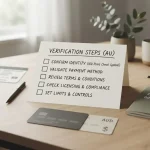
Verifying a Casino
Check the license
Look for licensing information in the footer or terms pages, such as Curaçao, MGA, or Gibraltar.
Confirm location acceptance
Ask the operator directly if they explicitly accept customers physically located in Australia.
Review withdrawal terms
Read the account and payment terms to understand the process for recovering winnings.
Then ask the operator directly whether it accepts customers physically located in Australia. Keep the answer and the relevant terms for reference. If the reply is unclear, the terms conflict, or the site refuses to confirm, I would not put money in. A mobile layout can make a casino look polished; it cannot tell you whether your location is accepted.
There is another catch with access. ACMA blocks some illegal gambling sites, so a page that will not open may be blocked rather than temporarily broken. Do not use a VPN to try to get around that block. The casino may treat a concealed location as a breach of its rules, which can mean a closed account or winnings being voided. Not worth the gamble.
Read the withdrawal and account terms before registering, too. An offshore operator’s own process is what you would be relying on if a payment dispute arose. There is no Australian government body you can complain to for help recovering winnings when an offshore casino refuses to pay. That is a serious difference from simply having a frustrating customer-service chat.
I also avoid treating “licensed” as a shortcut for “safe.” Check what the site says about who operates it, which jurisdiction it names, and what its terms say about access from Australia. If those details are hard to find, that is useful information in itself. Don’t let a familiar-looking brand, a phone-friendly page or a crypto payment option do the checking for you. Take your time. One clear answer beats a polished banner.
Once a game is running, the phone itself does most of the work. A small display can make controls feel crowded, while a weak connection or an overloaded device can interrupt play. I’ve found it helps to treat a freeze as a device problem first, rather than tapping repeatedly and hoping the screen catches up.
A specialist review identifies poor connectivity, limited memory, an outdated browser and too many background apps as common causes of trouble. Those problems can show up as a game that takes a long time to load, stutters during play or stops responding to taps. If the picture pauses, give it a moment before you touch anything again; repeated taps can make it harder to tell whether the game has registered your input.
Check the connection while you are playing. If other pages or apps are also struggling, the network may be the issue. Moving to a steadier connection can help, but avoid switching back and forth mid-game if you can. A brief interruption may leave the display waiting for the game to catch up. Patience is not glamorous. It is cheaper than guessing.
Your phone’s available memory matters too. Close apps you are not using, especially if the game has become sluggish after you have been moving between several things. If performance stays poor, restarting the browser or the device may clear the immediate bottleneck. Keep the browser updated as well: an old version can be less reliable with current site features.
The screen layout varies from one game to another. On a phone, buttons may sit close together, and text can be harder to read than on a larger display. Turn the device sideways only if the game supports that layout; otherwise, the controls may not become any easier to use. Take a moment to check where the main controls are before starting a round, particularly if the interface is unfamiliar.
If a game repeatedly hangs while other activity on your phone is fine, the problem may be specific to that game or its connection to the casino. Leave it rather than continuing to tap through a frozen screen, then try again later. That is a practical distinction: a single slow game does not prove the whole phone is failing.
For smoother mobile casino gaming, keep the device free of unnecessary background activity, use a stable connection and give the game time to respond. Newer graphics do not make a poor connection behave better. A little housekeeping often tells you more than another impatient tap.
A casino app downloaded from an app store is not necessarily a real-money gambling service. Social and free-play casino apps use virtual credits rather than cash, and these apps are legal to use in Australia. You can find them through the Google Play Store or Apple App Store. Check the app’s description before installing: virtual credits are for play within the app and are not a way to deposit or withdraw money.
That distinction matters when you see an offer described as free play or a mobile signup bonus. An app offering virtual credits is different from an offshore crypto-friendly casino taking real-money deposits. The word “free” does not make those two things interchangeable. If an offer is tied to real-money play, read its terms before claiming it, including wagering requirements, eligible games, expiry dates and any cashout cap. A bonus can come with strings attached.
Crypto and e-wallets are separate from virtual credits: they are payment methods used at real-money offshore sites. A specialist review reports that withdrawals through crypto and e-wallets are typically processed in under 24 hours. Treat that as a reported processing timeframe, not a promise. The casino may have its own pending period, and the receiving service can affect when funds become available.
Before depositing, confirm directly with the site that it accepts customers in your location. These casinos are offshore and crypto-friendly; they are not Australian-licensed casino services. Using a VPN to get around a block can put your account and winnings at risk, including possible account closure. No Australian government body can resolve a complaint if an offshore casino refuses to pay.
I would also be cautious about installing an app file offered outside the major app stores. A sideloaded casino app carries security risks, and its safety depends on the operator behind it. A familiar-looking icon is not a security check. For virtual-credit apps, use the official store listing and check what the app actually does before you install it.
Free-play apps can be a straightforward way to try a social casino format without depositing money. Just keep the boundary clear: virtual credits stay within the app, while crypto and e-wallet payments involve real money and an offshore operator. The label alone tells you little; the payment and withdrawal terms tell you what you are dealing with.
A first payout can involve more than tapping “withdraw”. Offshore casinos commonly ask for identity checks before processing a first withdrawal: expect to provide a selfie or identity document and proof of your address. I’d get those documents ready before depositing, then check that the name and details on your account match. A mismatch can turn a routine check into a delay.
Card deposits can fail for reasons that have nothing to do with your phone or the casino account. A specialist review reports that some Australian banks block or flag gambling-related card charges. If a payment is declined, check with your bank rather than repeatedly submitting the same transaction. A bank flag is not a reason to try to get around its controls.
Before putting money in, look for the account controls the operator actually provides. A specialist review lists deposit, loss and wager limits, session time limits, and self-exclusion among the options available at some casinos. These controls are most useful when you set them before a session, not after you have spent more time or money than intended. If you use a limit, check how it works and whether lowering it takes effect straight away; don’t assume every setting behaves the same way.
Treat an offshore mobile casino as a service outside Australia’s local consumer protections. If it refuses to pay winnings, there is no Australian government body you can complain to for help resolving that payout dispute. That matters even if the site is easy to reach on a phone and its account pages look polished. An offshore crypto-friendly casino does not become locally accountable just because it accepts Australian punters.
Keep your own record of deposits, withdrawals and account messages, and stop if you cannot verify what the operator requires. If gambling is causing stress or affecting your finances, use self-exclusion where available and step away. A limit is a boundary, not a way to make a risky arrangement safe.
A bonus can look generous on a phone screen and still be hard to turn into withdrawable winnings. The key is the wagering requirement: how much qualifying play the offer requires before its bonus funds, and sometimes related winnings, can be cashed out. The exact calculation and what counts toward it depend on the offer’s terms.
Specialist casino reviews describe welcome-bonus wagering requirements in the 30x–50x range. A 40x requirement means the stated bonus amount must be wagered forty times over; it does not mean you simply need to deposit or play that amount once. Reviews characterise requirements above 40x as steep. Treat that as a useful warning, not a promise about any particular mobile casino bonus: read the operator’s own terms before accepting.
The deadline matters just as much. Specialist reviews report that many bonuses have a 7–10 day clearance window. If the required wagering is not completed by the stated expiry, the bonus may be lost. A short window can be easy to miss when you are playing casually, and rushing to meet it is no reason to spend more than you intended. Check when the clock starts and whether the expiry applies to the bonus, winnings, or both.
Before claiming any offer—including one described as a no-deposit bonus—look for four details: the wagering requirement, which games contribute and at what rate, the expiry date, and any cashout cap. A game restriction can make progress slower than the headline suggests; a cashout cap can limit what you may withdraw even after completing the requirement. Bonus codes do not change those conditions unless the terms explicitly say so.
These checks matter whether an offer is presented on a mobile page or advertised as a code. Offshore crypto-friendly casinos are not locally licensed to provide online casino games in Australia, and an offer is not evidence that a site accepts your location. Confirm that directly before depositing. If an offshore casino refuses to pay, there is no Australian government body you can complain to for help.
I’d compare the conditions with what you would genuinely choose to play, rather than treating the bonus as cash. If the rules are unclear, leave it unclaimed. Small print is still the deal.
Yes. Most casinos accepting Australian players can be accessed through your phone’s browser using your existing account; some also offer a PWA shortcut.
Yes. Social and free-play casino apps with virtual credits are available in Australia through the Google Play Store and Apple App Store.
No. You can usually play through a mobile browser, and use the same account as on desktop.
A browser casino is a website you open and use in your mobile browser. A native app is a standalone app; a PWA is a website that can be added to your home screen and behave more like an app.
Playing at an offshore mobile casino is not illegal for individual Australian players under the Interactive Gambling Act 2001. The Act prohibits operators from offering online casino-style games to users in Australia, and ACMA actively blocks access to illegal gambling sites.