
PayID links a mobile number or email to a participating bank account, while transfers move through the New Payments Platform.
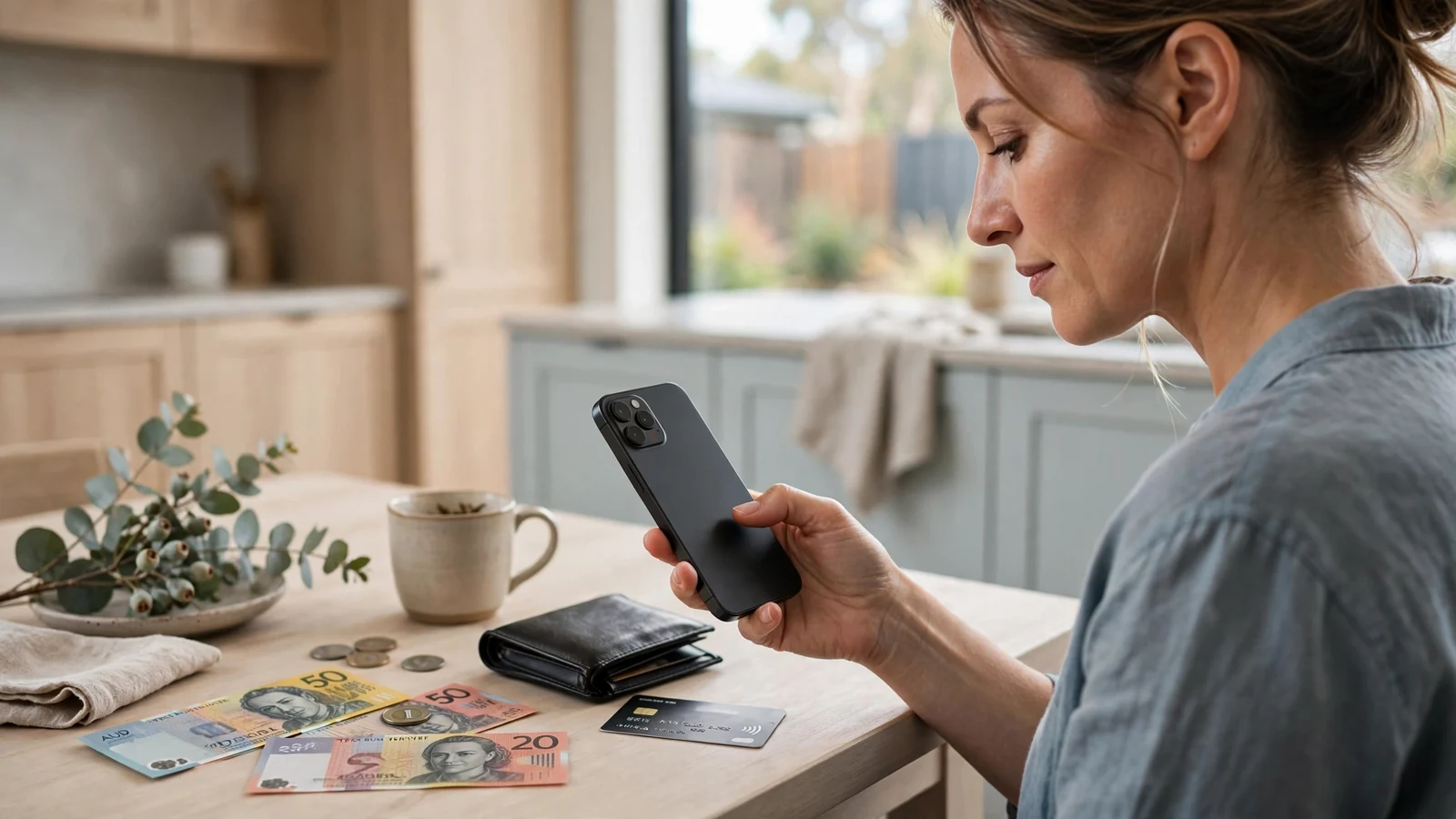
PayID is a way to identify the person or business receiving a bank transfer without relying on a string of account details. Instead, the recipient can be linked to an identifier such as a mobile phone number or email address. You enter that identifier in your bank’s payment service, check the recipient information shown, then send the money through your bank.
The important bit is that PayID is not a separate bank account or a wallet holding your funds. It connects an identifier to an account at a participating bank. The money still moves from one bank account to another; PayID makes it easier to direct the transfer. Think of it as an address for a payment, not the payment itself.
PayID operates through Australia’s New Payments Platform, usually shortened to NPP. The platform supports transfers between banks, so the payment does not have to follow the slower pattern of a traditional bank transfer. PayID transactions can be completed quickly, often within seconds. That is the payment-system context behind the claim that PayID is “instant”: the identifier helps route the payment, while the NPP provides the infrastructure for moving it between banks.
If you’re choosing online pokies that accept PayID in Australia in 2026, check the payment options and terms directly before depositing. This list gives you a concise reference to the specific operator details available.
Lucky Dreams
The stated minimum deposit is A$20 using POLi. The available details do not specify PayID availability.
Ricky Casino
The stated minimum deposit is A$20, or A$30 to qualify for the bonus. Payouts are listed as under 1 hour for crypto and 1–3 business days for PayID.
Neospin
Neospin is listed with a Curacao Gaming Control Board licence, OGL/2023/176/0095, held by Hollycorn N.V. The available details do not specify payment options.
Vegaz Casino
Vegaz Casino is listed with Curacao licence OGL/2024/1335/0780 and a minimum deposit of EUR 20. The available details do not specify PayID availability.
LuckyVibe
LuckyVibe is listed with a Curacao Gaming Control Board licence, OGL/2023/176/0095, held by Hollycorn N.V. The available details do not specify payment options.
DragonSlots Casino
DragonSlots Casino is listed as licensed by the Curacao Gaming Authority, with Jumpman Gaming Ltd as the named operator. No payment details are provided.
SkyCrown
SkyCrown is listed with a Tobique Gaming Commission licence and a minimum deposit of A$30. Payouts are listed as around 10–15 minutes for crypto and 1–5 days for fiat.
Uptown Pokies
Uptown Pokies is listed as operating since 2017, with a Curacao licence and a minimum deposit of A$20. The available details do not specify PayID availability.
SpinsUp
SpinsUp is listed with Curacao Gaming Control Board licence OGL/2023/174/0082, held by Dama N.V. The available details do not specify payment options.
7Bit Casino
7Bit Casino is listed as a Curacao operator run by Dama N.V. No payment or deposit details are provided.
The same basic idea applies whether you use a phone number or an email address. An identifier is registered with a bank and linked to an account. When someone sends money to it, the banking system uses that connection to route the funds. PayID is therefore useful when you need to make a transfer without asking the recipient to copy out a BSB and account number. Fewer details to type can mean fewer opportunities for a typo. It does not make every payment risk-free, though; it is still worth checking the recipient information your bank displays.
You may see PayID mentioned alongside Australian online pokies or other online casino payment options. It helps to separate the payment method from the service taking the payment. PayID describes a way to transfer money between bank accounts. Its presence does not tell you whether a gambling service is lawful, who operates it, or what happens to money sent to it. A familiar payment name is not a seal of approval. That distinction matters.
There is also a legal point specific to Australia. Under the Interactive Gambling Act 2001, it is illegal for operators to provide real-money online casino games, including pokies, to people physically located in Australia. A payment system does not change that rule. PayID’s role is to move funds between banks; it does not authorise an operator to offer a prohibited service. Nor should the fact that a payment option is mentioned on a website be read as evidence that the service is officially approved.
So, when you hear “PayID pokies”, the phrase combines two different things: a bank transfer method and a form of online gambling. The first is part of Australia’s payment infrastructure. The second is subject to the country’s gambling law. Keeping those ideas apart makes it easier to understand what PayID can—and cannot—tell you.
For a newcomer, the plainest description is this: PayID replaces some account details with a registered identifier, and the NPP carries the transfer between banks. It is a payment route, not a guarantee about the recipient or the purpose of a payment. The mechanics are straightforward. The context still matters.
Before you send a PayID transfer, pause over the details you have entered. PayID is linked to an identifier registered with your bank, such as your mobile number or email address. The information used for a payment needs to match the PayID details held by your bank. A typo, an old email address or a number you no longer use can turn a routine check into a payment problem.
Check the identifier against your bank registration rather than relying on memory. If you have more than one email address or phone number, make sure you are using the one actually registered for PayID. A familiar-looking detail is not enough; the match matters. If you are uncertain which identifier is active, confirm it through your bank before attempting a transfer.
There is a separate name check worth making. Your bank account name should match the name on the casino profile. A difference between those details can cause trouble when funds are being returned. Check both before proceeding, particularly if you have recently changed your name or opened an account using different personal details. It is easier to spot a mismatch beforehand than to sort it out after money has moved.
Treat the recipient details with the same care. Read the payment information shown to you and compare it with what you are about to enter. Do not guess at a missing detail or proceed because a recipient name looks familiar. If anything does not line up, stop and clarify it before confirming. The important moment is before authorisation: once a PayID transaction is confirmed, it cannot be reversed.
That last point is easy to underestimate. A confirmed transfer is not like a message you can unsend. If you discover afterward that you entered the wrong details, you cannot simply cancel the payment yourself through PayID. So take a breath, review the identifier and recipient, then decide whether to continue. A few seconds of checking beats a long attempt to undo a completed transfer.
I would make the check in a fixed order: confirm the PayID identifier, compare it with the details registered at your bank, check that the account name matches your profile, and review the recipient information before confirming. If one part is unclear, do not fill the gap with a guess. Go back to the relevant account information and resolve it first. Small errors are still errors.
Keep the distinction between a payment method and the service receiving a payment clear. Seeing PayID mentioned somewhere does not establish anything about an operator’s licence, the fairness of its games, the transparency of return-to-player information or whether winnings will be paid. Those are separate questions, not conclusions you can draw from a payment logo. A familiar transfer method is no endorsement.
There is also a legal boundary in Australia. Under the Interactive Gambling Act 2001, operators are prohibited from providing real-money online casino games, including pokies, to people located in the country. That concerns the operator’s conduct; Australian players are not subject to a fine or criminal prosecution simply for playing at an offshore casino. Keep that distinction in mind when reading claims about real-money pokies. Payment functionality does not change the legal status of the service.
If you are looking at a payment screen, do not let speed or a small-looking amount rush you past the checks. The same rules apply whether the transfer seems routine or you have used the identifier before: confirm the registered PayID details, check the account-name match, and read the recipient information carefully. Once confirmed, the transfer is final.
A careful pause is the useful part. PayID can move money, but it cannot correct a detail you approved by mistake. Check first, confirm only when the information is right, and leave the transaction alone if you cannot verify it.
Before weighing up a PayID option for real-money pokies, start with the legal position, not the payment logo. Under the Interactive Gambling Act 2001, operators must not provide online casino games, including pokies, to people physically located in Australia. The Australian Communications and Media Authority enforces the rules, and offshore casino services are subject to blocking. A foreign licence does not change the restriction or become an Australian authorisation.
That matters when you see claims about the best PayID pokies in Australia. A payment method can tell you how an operator proposes to move money; it cannot establish that the service is lawful for Australians. Nor does a PayID logo turn a foreign licence into local approval. I would treat those as separate questions, not let a familiar payment name answer the more important one.
If you are checking an operator’s licence as part of understanding its claims, look for a licence that can be verified directly with the issuing authority. Read the authority’s own register or public records rather than relying on a badge, a certificate image or the operator’s wording. Confirm that the named company and the site match the record, and check what the licence actually permits. A licence from overseas is not a licence to provide prohibited online casino games to customers in Australia.
There is no Australian licence that makes offering real-money online pokies to people here permissible. So a page describing an operator as “licensed” needs context: licensed where, by whom, and for which services? If the claim relies on an overseas regulator, that may describe the operator’s status in another jurisdiction, but it does not remove the Australian restriction. The distinction is easy to miss when the licence badge sits beside a PayID symbol.
The same caution applies to cashier pages. A general payment page, a review, or a logo in a footer does not prove that PayID is available for the transaction you are considering. Before creating an account, the relevant check would be the operator’s own cashier information, where payment methods and any conditions are displayed. If the page is unclear, don’t infer availability from a general claim. But finding PayID there answers only a narrow question: whether the operator says it accepts that method.
It does not prove that a service is lawful in Australia, that its games are fair, that return-to-player information is transparent, or that winnings will be paid. Those are separate claims requiring separate evidence, and even apparently detailed terms cannot override Australian law. A neat cashier page is not a compliance certificate. Dry, but useful.
Be wary of claims that combine several assurances into one sales pitch: “licensed,” “fair,” “fast payouts” and “PayID accepted.” Ask what evidence supports each statement and who is responsible for it. For fairness or return-to-player figures, look for clear information about the relevant games and independent verification, rather than treating a payment option as proof. For payment claims, look for the actual cashier details, not just promotional copy. None of these checks makes an Australian real-money casino service lawful.
You may also see people describing a PayID pokies list or calling particular sites the best. A list is not a regulator’s register, and a ranking does not verify a licence or guarantee a result. Treat user reports and promotional reviews as claims to assess, not as official confirmation. I would not use a payment badge, a ranking, or a polished site design as a substitute for checking who operates the service and what the law allows.
A specialist review has cited PayID minimum deposits of AU$10 to AU$30 at some operators. That is a reported range, not a standard applying to every cashier, and it does not establish that any operator is authorised to offer real-money pokies to Australians. The cashier’s own terms are the place to check transaction conditions; the payment method alone is not enough.
The practical takeaway is straightforward: separate the questions. A displayed PayID option may indicate a proposed payment route. An overseas licence may describe a status outside Australia. Neither fact establishes permission to provide real-money online casino games to people here. In this market, check the legal context first, and don’t let a familiar payment method stand in for it.
Before considering a payment, keep the legal position clear: under Australia’s Interactive Gambling Act 2001, operators cannot provide real-money online casino games, including pokies, to people in Australia. The payment method does not change that.
For a transaction that is otherwise permitted, the first practical check is the minimum shown at the payment stage. A specialist review reports that many operators set PayID deposit minimums in the AU$10–AU$20 range. Treat that as a guide, not a promise about a particular cashier: the amount presented to you is the one that matters. A minimum can also differ between payment methods, so do not assume a figure shown beside another option applies to PayID.
A low minimum does not mean a transfer will go through. Your bank sets the daily PayID transfer limit, according to a specialist review, and that limit can be the constraint even when the amount requested is within the payment page’s own range. Check your bank’s app or contact the bank if you need to confirm what limit applies to your account. The operator’s stated minimum and your bank’s transfer ceiling are separate controls.
That distinction is easy to miss. The cashier may accept the amount you enter, while your bank declines the transfer because it exceeds the limit available to you. If you see a decline, check the bank’s transaction details and limit settings before trying again. Repeated attempts without understanding the reason can make a simple error harder to untangle.
A second possible interruption is a bank block. A specialist review reports that some Australian banks, including members of the Big Four, have occasionally blocked PayID transfers to gambling merchants identified under their acceptable use policies. This is not a guarantee that your bank will block a payment, nor that every transfer to a gambling merchant will be treated alike. Bank policies and decisions can change.
If a transfer is declined, do not treat the message as proof that the payment service is unavailable everywhere, or that another route will necessarily work. Check the bank’s explanation and ask the bank about its policy. Do not try to get around a restriction by disguising the recipient or routing the payment through someone else’s account. That can create fresh problems rather than resolve the original one.
Where a PayID deposit is allowed, the transfer itself may complete within seconds. That describes the payment movement, not whether the bank will approve it in the first place. A rejected or held transaction is a different situation from a transfer that has been accepted and sent. If the money appears to have left your account but has not been credited, keep the transaction record and contact the bank or payment provider through its official support channel.
I would check three things before treating any displayed minimum as usable: the amount the payment page requires, the limit currently set by the bank, and whether the bank permits that kind of transaction. Each answers a different question. A low minimum answers only the first.
PayID is not a workaround for Australia’s restrictions on real-money online casino services. If you are checking a payment screen, do not let a quick transfer or a small entry amount distract from the underlying legal position. A payment can be technically possible without making the service lawful for an operator to provide in Australia.
If you are trying to establish whether a site actually lists PayID, go straight to its cashier or payments page. A banner, a search result, or a general statement that “many payment methods are supported” does not confirm that PayID is available for that particular service. The cashier is the place to check.
Do this before creating an account or sharing personal details. Look for PayID by name in the available deposit methods, and read the accompanying terms. A payment logo in a footer may refer to another service, while a page that mentions bank transfers may not mean it supports PayID. The distinction matters: do not treat a vague reference to Australian payments as proof.
Check PayID Availability
Visit the cashier
Go directly to the payments page before creating an account.
Locate PayID
Search for PayID by name in the listed deposit methods.
Verify terms
Read the accompanying terms to ensure it is available for deposits for Australian users.
If the cashier is visible without registration, inspect it directly. If it is not, do not assume that opening an account will reveal the option. You can ask the operator’s support team a narrow question: is PayID currently available for deposits for Australian users, and where is it shown in the cashier? Keep the reply, but treat the cashier page and the written payment terms as the details to compare it with. A broad assurance from support is not a substitute for a listed method.
Check whether PayID is described specifically for deposits. A page may discuss a payment method generally without saying whether it can be used to fund an account. The reverse can also happen: a cashier may show a deposit method but give no clear information about other payment functions. Do not infer one from the other. This check is only about whether the site lists PayID for the transaction you are considering.
The wording should be clear enough to identify the method, not something you have to decode from a string of bank logos. If PayID appears only in a promotional claim, but not in the cashier or payment terms, the claim remains unconfirmed. If the cashier says it is unavailable, treat that as the practical answer rather than relying on an older page or a third-party description.
There is a separate and more important point for people in Australia: checking a payment page does not establish that a real-money casino service can lawfully be provided here. Under the Interactive Gambling Act 2001, operators are prohibited from providing online casino games, including pokies, to people physically located in Australia. The presence of PayID does not change that, and it does not establish that an operator has a local licence. There is no local licence for real-money online casino services of this kind. The Australian Communications and Media Authority oversees the relevant rules and enforcement.
So, if you encounter a page presenting itself as a local PayID pokies option, do not read the payment listing as a sign of approval or endorsement. A cashier can tell you what the site claims to accept; it cannot prove that the service is lawful, fair, transparent about return rates, or willing to pay winnings. Payment access is a narrow detail, not a quality check.
For a straightforward check, confirm the named method on the cashier page, make sure the terms refer to the transaction you have in mind, and note whether the information is current and consistent. If those details are absent or contradictory, you have no solid basis to say PayID is offered. No guesswork needed.
A list of sites described elsewhere as PayID pokies casinos can quickly go stale, and a listing does not verify what appears in a particular cashier. Avoid treating a directory, partnership claim, or social post as confirmation. The relevant detail is the payment information shown by the operator itself—and even that answers only the narrow question of whether PayID is listed, not whether using the service is appropriate for someone in Australia.
For anyone comparing PayID costs, two things are easy to mix up: the transfer limit comes from your bank, while PayID itself does not charge a transfer fee. A specialist review identifies the bank as the party that sets the daily PayID limit. Check your bank’s own payment settings or ask it directly; the amount available to you is not a limit set by PayID.
That distinction matters if you are looking at an offshore gambling site that mentions PayID. A payment option cannot raise the limit your bank applies, and a site’s cashier cannot change it either. If a transfer is declined because of a bank limit, the relevant place to check is your bank—not a promise on a casino page.
On fees, PayID does not add a charge for moving money. Reputable venues also do not add a separate PayID transaction fee. Read the cashier terms carefully, though: a fee stated by an operator is not a PayID fee, and vague wording about “payment costs” is a reason to ask for a clear explanation before proceeding. Don’t assume that a page showing PayID makes every transaction free.
There is a more important Australian context here. The Interactive Gambling Act 2001 prohibits operators from providing real-money online casino games, including pokies, to people in Australia. A payment method being named on a website does not change that legal position, nor does it establish that the site is fair or will pay out.
So, if you are checking an “Aussie PayID pokies” claim, keep the cost question narrow: your bank controls its daily transfer cap, and PayID itself does not levy a transfer fee. Treat any extra charge as an operator’s stated fee, not as a standard PayID cost. And don’t mistake a working payment route for an endorsement.
A PayID withdrawal is not necessarily sent as soon as you press the request button. The casino first reviews it internally, and the time that takes can depend on its process and whether your identity checks are complete. If documents are still required, or the account needs further review, the payment can remain pending before it reaches the bank-transfer stage.
A specialist review describes casino-initiated withdrawals as sometimes sitting in a pending period of 24–72 hours. That is a reported process, not a fixed timetable for every operator. The same type of review puts the PayID transfer after approval at 12–24 hours, with the full journey from request to receipt often taking 2–4 days when the pending stage is included. Treat those figures as an indication of how the stages can add up, not a promise about a particular payment.
The useful distinction is simple: “pending” means the casino has not yet released the funds; “approved” means its review is complete and the transfer can proceed. PayID can move money quickly once the casino sends it, but it cannot shorten the casino’s own checks. Your KYC status matters, as does the venue’s handling of withdrawals. A delay at the first stage is not necessarily a bank-transfer delay.
A specialist review describes a process where withdrawals may sit in a pending period of 24–72 hours. Once approved, the PayID transfer may take another 12–24 hours, meaning the full journey can often take 2–4 days.
Minimums and deductions are separate details to check in the withdrawal terms. Specialist reviews report withdrawal minimums commonly around AUD 20–50, though each operator sets its own threshold. They also report that some operators deduct AUD 5–10 from withdrawals below internal thresholds such as AUD 100 or AUD 200. Those are operator conditions, not a PayID transfer fee; PayID itself does not charge a transfer fee.
For Australian readers, there is an important legal context: the Interactive Gambling Act 2001 prohibits operators from providing real-money online casino games to people in Australia. This explanation is not a recommendation to use such a service. If you are already dealing with a withdrawal, keep the request details and any correspondence, and ask the operator to clarify whether the payment is still under review or has been released.
A short wait can be procedural. An unexplained one needs an answer.
A post promising free credits for PayID pokies is not a complete set of bonus terms. A Facebook image, comment or shared message may leave out conditions that determine whether a credit can be used, what wagering applies, and when winnings can be withdrawn. Treat the post as an unverified claim, not as proof that an offer exists or that its conditions are clear.
There is an important legal context in Australia: under the Interactive Gambling Act 2001, operators cannot lawfully provide real-money online casino games to people in the country. That includes pokies.
If you encounter a bonus claim, read the full terms rather than relying on the headline. Pay particular attention to whether the offer is tied to a deposit, which games count towards wagering, whether there is a maximum bet while wagering, and what rules apply to withdrawing any associated winnings. The details matter more than the word “free”.
A specialist review reports bonus wagering requirements of 30x–45x the bonus amount. That is a reported range, not a universal rule or a promise about any particular offer. The calculation and the amount it applies to can depend on the specific terms, so do not assume that a headline credit can be withdrawn as cash without meeting conditions.
The maximum-bet clause is especially easy to miss. If bonus wagering has a bet cap, exceeding it can void the bonus and associated winnings. Check that condition before making any decision; once a bonus is forfeited, arguing over what a social post seemed to promise may not restore it.
Facebook claims about PayID pokies deserve the same caution. A post may not identify who issued it, whether the offer is current, or where the full terms can be read. Comments and screenshots do not establish the operator’s status, fairness, published game returns or willingness to pay. Nor does mentioning PayID prove that a promotion is legitimate. Don’t provide payment or identity details in response to a post whose source and conditions you cannot verify.
Be wary of claims repeated in groups or forums, too. Someone describing a free-credit offer may be sharing an old promotion, repeating hearsay or omitting the conditions they encountered. A confident comment is still not the terms and conditions.
One more clause can matter: creating multiple accounts with the same casino may lead to account bans or forfeiture of winnings. A second profile is not a safe workaround for an offer that has ended or is limited to one account. Read any stated eligibility rules as written, rather than trying to get around them.
“Free” is only the headline. The conditions tell the story.
If you make a bank transfer, enter the recipient’s registered PayID in your banking service, check the recipient details shown, and confirm only if they match. Transfers can arrive within seconds, but PayID does not make real-money online pokies lawful for people in Australia.
Typical minimum PayID deposits are A$10–A$20, though some operators accept A$5.
Your bank sets the daily limit for PayID transfers. Check your bank’s limit before making a payment.
After approval, a PayID withdrawal typically takes 12–24 hours to reach your account. Casino review and pending periods can bring the total time from request to receipt to around 2–4 days.